Categories
Listen New Releases Top Stories

Vivian Campbell Talks Dio, Whitesnake, Def Leppard, Riverdogs, Shadow King – 2025

In a recent interview on “dopeYEAH Talk,” guitarist Vivian Campbell talked about Dio, Whitesnake, Riverdogs, Shadow King and Def Leppard. You can watch the entire interview via the embedded YouTube clip below (a clip from a full in bloom interview with Adrian Vandenberg has been provided as well).

Categories
Live Stream Music

Metallica Was Told Not To Make Eye Contact With Mick Jagger When They Opened for the Rolling Stones – Lar Ulrich Interview 2023

Club Random:
Lars Ulrich | Club Random w/ Bill Maher.

You can listen to the entire interview via the embedded YouTube clip or @ this location. An excerpt has been provided (transcribed by full in bloom).

Bill Maher: What do you think of Mick (Jagger) and Keith (Richards) doing it at 80?

Lars Ulrich:

I respect and love it.

I remember when we were doing Rolling Stones are old jokes when they were 50. I remember, ‘Their new hit is number one with an arrow.’

I’ll tell you a story – I’ve said it a couple of times before because it hits right to the center of what you are saying. We were fortunate enough to get asked to play with the Stones about 20 years ago. They were playing a couple of shows in San Francisco and asked if we would play with them. At that time, we had played shows in our career with Deep Purple, AC/DC, and a few other bands; all bands that I had posters on my wall when I was a kid. So, the last one of those boxes to check was the Stones.

We’re playing a couple of shows, where the (San Francisco) Giants played, and we’re no spring chickens at this point. We’re in our early 40s, late 30s. We’re sitting backstage – and this is in no way a judgment on the Stones, this is really more about us – we’re sitting backstage and at one point a personal assistant or whatever comes and says: “Mick Jagger is going to walk through here in a couple of minutes. He’s going over to his private gym in his truck, and he is going to warm up before the show. When he walks through here, please don’t make eye contact with him or talk to him.” We’re sitting there going: “What? He has a truck with a portable gym in it? He goes and warms up for 30 to 40 minutes before he goes on stage?” Cue, HA HA because we are still like late 30s, early 40s. Now, guess who’s got a truck with a gym in it? Guess who’s got a Peloton bike on the road with us? Guess who’s got a chef who walks around and makes us protein drinks and all kinds of other nasty stuff? We’re right there in it.

I get your point. I think you’re missing the really salient part of the story. It’s not that he was warming up before the show, which is completely understandable, whether you’re 20, 30, or 80.

I know what you’re referring to.

Come on, that’s so disappointing.

You know, we used to laugh a lot at those things.

Did he walk through, and you did that and didn’t look? You must’ve talked to him at some point.

We were told we could have a picture taken with the Rolling Stones as they were walking to the stage. There was another support act. The two guest acts (Metallica & Everclear) were in the tunnel that goes up to the stage. The Stones stopped and took a picture with them (Everclear). I don’t think they fully stopped. They were sort of caught in mid-walk where they slowed down just long enough. Then they got to us, and we got our picture taken with the Stones.

I had dreams of, we’re going to play with the Rolling Stones, and you know I’m going to spend my time in Keith Richards’ hotel room doing those legendary parties until 9 o’clock in the morning. I’ll be the last one to leave. It wasn’t exactly like that.

I don’t disrespect them for that. Now, we’re turning into a version of that. But we are always very careful. I always go and say hello to our support act. I look them in the eye. I ask them if there’s anything they need. It’s a human thing. If somebody comes out and plays on a Metallica stage, I want them to feel at home.

There also something involved here called professional courtesy. If you were like a very new, beginning band, it still wouldn’t be acceptable, but it would be a little more understandable. But you’re a peer, who probably, at that moment, was selling more records than they were. It’s just so disappointing. I’ve heard stories like this before. There’s a big rock star, I’m not going to say who it is. I happen to like him personally in my brief encounters with him. But someone I know, who I know is not lying, said she walked up to him. He was having lunch with his wife somewhere, and she said, “I hate to bother you,” and he cut her off and said, “And yet, you did.”

The first time we were exposed to that, and again, I’ll refrain from saying the name. This was the mid to late ’80s, and we were just figuring it all out and getting into arenas. Our tour manager had been on tour with this other band, who were a little more established than we were. But they weren’t the Rolling Stones, or they weren’t legends in their own mind. He was telling stories about the lead singer. The tour manager had to go in front five minutes before and tell whatever crew people – technicians, or whatever awesome people who make rock n’ roll shows go up and down, whether it’s catering or all the people that work at these buildings, God bless every one of them – “No eye contact allowed.” We were sitting there, we were 25 years old, just hysterically laughing. How can anybody look at another human being and go, “No eye contact allowed?” What is that about?

Categories
Listen Movie Stories Movies Music Top Stories

Henry Rollins: “When you’re getting razzed by Al Pacino, how bad is your day?” – 2023

The Guardian: The writer, actor and legendary punk musician answers your questions on working with William Shatner and Al Pacino, the joy of lifting weights and Leeds’ best onion bhajis.

You can read the entire interview @ this location. An excerpt has been provided below.

How was the experience of working on the film Heat?

The director, Michael Mann, said: “Your character has scenes with Al Pacino, but if Al doesn’t like you, you can’t be in the movie. So we’re going to have lunch to see if he likes you.” I’m like: “Uh? When?” He goes: “We’re leaving now.” We walked out with my jaw on the floor and went to some high-class Italian restaurant in Beverly Hills.

Al’s like: “Call me Al.” At the end of the lunch, he goes: “Michael, I like him.” Every day on set, I’d go: “How are you, sir?” Al would put his hand on my shoulder, say: “Henry, not so good,” and tell me in great detail about how he’d pulled a muscle in his arm. He was hilarious to be around. There’s one scene where I’m handcuffed, so Al would sit on a couch and keep me company while I was being unlocked: “Someone give me a magic marker. I’m gonna draw a moustache on Henry.” When you’re getting razzed by Al Pacino, how bad is your day?

I heard the sad news about the death of Glen “Spot” Lockett [the influential Black Flag and SST Records producer] . Do you have a story to share, or a favourite album that he produced?

Spot had a very old-school way of recording: fewer microphones, less mixing, everything live, like he was cutting a Charlie Parker side. My favourite album he did is The Punch Line by Minutemen, from 1981. They were very argumentative, so Spot would go: “OK, that’s the take. Shut up,” and they were smart enough to listen.

I’ve never met anyone like him. He would go around for days wearing roller-skates. When Black Flag recorded Damaged, Greg Ginn wanted to hear what it sounded like in the studio, so Spot picked up Greg’s guitar and while the band were playing he absolutely nailed the track Damaged II, which is like math rock. Greg was an astonishing guitarist, but he was totally shut down. It was hilarious. The chess master got checkmated.

What are you memories of performing in Ukraine – and would you perform in Kyiv or Moscow now?

Kyiv was really beautiful and the audiences were really thoughtful and appreciative. Russian audiences were always fantastic. Going to Ukraine would be making light of the situation, unless I could afford the flights myself and do a show for free, a sort of tonic for the troops, like I used to do with USO [United Service Organizations, a live-entertainment charity for the US armed forces] in Iraq and Afghanistan. I wouldn’t go to Russia now for fear of something being dropped into my tea.

You can read the entire interview @ this location.

Categories
Cool Chitz History Listen Music Top Stories

Rare David Lee Roth Interview from 1986 in Japan: “Watch him go from “Dave mode” to 💎 DAVID LEE ROTH” – VIDEO

Greg Renoff:

An interview with David Lee Roth from 🇯🇵 1986 – fun to watch him go from “Dave mode” to 💎 DAVID LEE ROTH mode once the interview starts. 🎥

INTERVIEW INTRO


ENTIRE INTERVIEW

Categories
Listen Music Top Stories

Steve Vai on His Unreleased Album with Ozzy Osbourne: “That record doesn’t sound like anything else” – 2023

eonmusic: Delving deeper into his past, we caught up with Steve Vai to discuss #Vaigash, plans for reissues of some of his greatest works, and get an EXCLUSIVE on the album he recorded with Ozzy Osbourne, and how felt playing with Whitesnake/David Coverdale once again.

You can read the entire interview @ this location. An excerpt has been provided below.

Ozzy Osbourne has this year announced his retirement from touring, so I wanted to ask what it was like to work with him back in the 1990s?

Well, I’m sitting on a whole Ozzy record, and it’s like the Gash record – not ‘like’ the Gash record – but it’s a project that I recorded that’s sitting on the shelf. I don’t have any control over it or rights to it, obviously, but we did record some pretty good stuff. The interesting thing about that stuff we recorded from a guitar perspective is all of my rhythm guitar parts, I use an octave divider [guitar effect], and that record doesn’t sound like anything else.

How close did you come to joining Ozzy’s band at that time?

Okay, so Ozzy and I, basically what happened as far as I recognized, Ozzy had recorded about half of his record [ ‘Ozzmosis’, 1995] for the record company, and Sharon and the label wanted to get him together with some different songwriters to just get some more songs. So I was one of the ones that they wanted to get together with. It was really just to write some songs for Ozzy’s record that he would then take and go use for his record, and whoever he was working with on the record would record it. So I thought; “yeah, that’d be great. I’d love to do that”, but Ozzy and I got carried away because we were having a lot of fun, and we ended up recording a lot of stuff.

And then we started scheming; “hey, let’s make a new record!”, and all that was fine and good, and we got excited about it until the hammer came down, and they basically said; “what are you doing? No, you’ve just got to take a song from Vai and finish your record. We’re already into it for this much money, and Vai is expense”, so it worked out perfect, really.

So you ended up doing a whole album with Ozzy?!

Yeah, one of the songs was ‘Danger Zone’. I had already written it, and it was already done – it was a Gash track – and I thought; “well, maybe he’d like this”, and I reworked it a bit, but it’s on the shelf. There’s also a song called ‘Dyin’ Day’ that’s on my ‘Fire Garden’ album, because that song originally had lyrics, and that was one. There was some real, real heavy stuff because, as I mentioned, I used an octave divider on everything, and that was a conscious effort. I thought “okay, you’re going to work with Ozzy, and all these incredible guitar players have played with Ozzy; what are you going to do?” I was not going to be conventional. Yeah, that’s not me as you know, but I had to be accessible, so I thought; “I’m going to use an octave divider on everything”; I mean, all the rhythm.

You can read the entire interview @ this location.

Categories
History Listen Music New Releases Top Stories

Jake E. Lee, Mick Mars, Doc McGhee, Ozzy & Sharon Osbourne Remember the 1984 Bark at the Moon/Shout at the Devil Tour

Metal Edge: Take a trip back to 1984 with Ozzy, Mötley Crüe, Jake E. Lee and more as they recall the insane ‘Bark at the Moon’ tour.

You can read the entire feature @ this location. An excerpt has been provided below.

Purchase Nothin’ But a Good Time on Paperback via Amazon

MIKE BONE (executive, Elektra Records) Shout at the Devil was selling like gangbusters. I was the head of promotion at Elektra, and the guy who was my predecessor was this guy named Lou. One day Lou comes into my office and he goes, “Hey, Bone, look at this. This Mötley Crüe record just clicked past 500,000. We’ve got a gold record here! We should go and show this to the band.” I said, “Yeah, they’re out on the road.” They were in Binghamton, New York. [Manager] Doc McGhee had them opening for Ozzy.

That night we were in Binghamton, they were staying at some cheap motel, a Ramada Inn or something like that. And because we were the opening act we got back to the motel relatively early. There was a restaurant there, and Lou and I were gonna have a beer with the band and then get in our car and head back to the city. So we’re having a drink, and while we’re doing this, buses are pulling up to the hotel, and they’re dropping off all these ski people in their ski outfits who are coming from New York up to Binghamton. So now on one side of the room are the ski people with their knitted caps and everything, and on the other side is Mötley Crüe and their road crew and some groupies. And Vince has this girl at the bar, and he takes her underwear off and . . . Let’s just put it this way, he used a longneck beer bottle on her. In the restaurant, in full view of everyone, including the skiers. This girl’s friend was right there with her as this was going on, and she says, “I can’t believe you’re letting him do this to you!” And the girl looks at her friend and she goes, “I’m with Vince Neil of the Mötley Crüe!” I’m like, “Oh boy, let me finish my beer and get out of here…”

MICK MARS (guitarist, Mötley Crüe) I remember Ozzy just had his daughter Aimee and I remember seeing her as a tiny, tiny little baby. Sharon had just had that kid when we were doing that tour. But Ozzy was still fuckin’ up everywhere. He’d come up to our bus singin’ “Iron Man” but he was singin’, “I… am… krelly man.” And he’d have about half an ounce of cocaine in a baggie and he’d come on the bus and cut out a bunch of cocaine lines and stuff. We called ’em Texas power rails. And the next thing that I know is, I was go- ing to my room, the other guys went to the pool, Nikki pissed, and Ozzy started snorting ants.

JAKE E. LEE (guitarist, Ozzy Osbourne) I was there for the whole snorting-of-the-ants thing. I think my version’s a little bit different than anybody else’s, but I also was the only guy that wasn’t drunk. I’ll just tell you the way I remember it. We’re at the hotel swimming pool during the day and Ozzy was there bragging about how fit he was getting. Because my martial arts instructor was out on tour with us as Ozzy’s bodyguard and trainer. And I think it was Nikki who said, “Yeah? How many push-ups can you do?” And so they had a push-up contest. Ozzy did about three, I think. Then they had a sit-up contest. Ozzy lost that, too. Then Nikki said, “Well, let’s change the rules.” And Nikki was out there with a girl that he had met the night before. She was lounging in the sun and Nikki pulls his dick out and starts pissing. She didn’t like it, she ran off. It was getting weird, because there were families out there at the pool.

Then Ozzy was sitting on the concrete and we were looking at him to see what he was going to do. And he had this funny look on his face, and that’s when I could see that he was pissing in his trunks while he was sitting down. There’s this pool of piss forming around him, and because he was quote-unquote in physical training, he must have been taking a lot of vitamins because I remember his piss was almost fluorescent. So Nikki’s kind of looking at him, like, “I dunno if that beats me…” And then Ozzy got on his hands and knees and started licking his piss up. That’s when I gathered my things and I said, “Okay, I’m out.” And as I was walking away I saw him snorting something on the ground, which I assume was the line of ants. If they did anything after that, I don’t know and I kinda don’t want to.

The arenas were always full when Mötley went on. Nobody wanted to miss them. They had a great audience reaction. And definitely a lot more girls were interested in meeting Mötley Crüe after the show than they were in coming to the Ozzy bus. You could tell they were going to be huge.

OZZY OSBOURNE I was well established but Mötley Crüe were coming up fast. It was a good package. But it was one of the most dangerous tours I ever did. I said that to Doc one day, “It’s getting so crazy… ”

SHARON OSBOURNE A lot of it has obviously been exaggerated. But it was nothing new to me. It was like, “Been there, done that. Move on, kids.” I was brought up at a time where there were real gangsters in the music industry, and people had guns and artists had guns and it was a much tougher business. I’d been around all of that and all the groupies and all the insane behavior. So it did nothing to me. It was just like, “Oh, fuck off.” I was just trying to keep my husband alive.

DOC McGHEE I don’t think there was anyone in Mötley Crüe that went, “If we do this, that’s going to be cool and people are going to… ” You know what I mean? These guys weren’t bad guys and they didn’t do it to be rock stars. They did it because that’s what they did.

You can read the entire feature @ this location.

Categories
History Listen Music Top Stories

Gene Simmons & Paul Stanley on Recording KISS Demos w/ Eddie & Alex Van Halen & Songwriting: “There’s nothing wrong with stealing, as long as you do it right”

Guitar World: Paul Stanley and Gene Simmons talk classic Kiss tracks, including the lick they ripped off from the Rolling Stones, and the song they nearly gave to Rod Stewart.

You can read the entire feature @ this location. An excerpt from the article has been provided below.

On the song “Deuce”:

Gene Simmons:

“That was the first song I ever wrote for Kiss; it was thrown together in about half an hour. I ripped off the lick from Bitch by The Rolling Stones and changed it, so it starts in A and goes to a C.

“I purposely set out to create a repetitive lick – like in Satisfaction or Bitch. Lyrically, I had the slight thread of a story line, but I was more concerned with conveying attitude than making sense of the word ‘deuce’. I’m not quite sure what the line, ‘You know your man is working hard, he’s worth a deuce!’ means, but it sounded right.”

On the song “Hotter Than Hell”:

Paul Stanley:

“I was always a big fan of Free, and All Right Now really meant a lot to me – it was a perfect song. Hotter than Hell was basically me rewriting that song. There’s nothing wrong with stealing, as long as you do it right – and make sure that you’re stealing a diamond, not a piece of glass.

“All bands start off being fairly derivative, and copying others is the first step toward developing your own style. At that point I had gotten my first real custom guitar. A guy in New York named Charles Lobue built me something similar to a ’58 Flying V with two humbuckers – pretty similar to what Albert King was playing, but with one wing shorter than the other. Randy Rhoads’ Jackson V had a similar design.”

On the song “God of Thunder”:

Simmons:

“By the end of our third record [Dressed to Kill], we had gotten very used to each other’s songwriting styles. Paul’s songs were always a little snappier and happier, and mine were always darker and gloomier. So we’d poke fun at each other sometimes, and Paul once said to me, ‘Anybody can write a Gene Simmons song.’ To prove his point, he came back the next day with God of Thunder. I changed some of the lyrics and sang it.

“When I first heard the song, I immediately had visions of the scene in Fantasia where the mountain top opens and this big, winged thing is standing there – something from the dark shadows. But Paul’s God of Thunder lyrics totally missed the point – they were all about Aphrodite and love.

“The sound effect of the little kid was actually done by Bob Ezrin’s two sons, who ran into the studio wearing toy helmets and carrying walkie-talkies and ray guns. The weird voice on the song is one of the kid’s voices coming through a helmet, which we miked. It wasn’t planned, and we had no idea what it all meant, but it seemed right. It’s real Twilight Zone stuff – very weird.”

Stanley:

“I won’t say that Gene is lying about God of Thunder, but maybe he was trying to entertain you. It’s in Gene’s nature to glamorize a story and make it more interesting than it really is.

“Here’s the real story: I wrote that song about myself, and the original lyrics were almost identical to what was recorded. ‘Hear my word and take heed’ was originally ‘We make love ’til we bleed,’ but that was the only thing that was changed.

“When I wrote it, I had every intention of singing it, but Bob Ezrin thought that it would be more appropriate for Gene to sing. Although it became known as a Gene Simmons song, it certainly wasn’t written for him or as a joke.”

On the song “Christine Sixteen”:

Simmons:

“That song started as another great conversation with Paul: ‘You write dumb songs!’ ‘No, you write dumb songs!’ Paul had stolen some of my titles, like Black Diamond, and when he came up with the title Christine Sixteen, I stole it. I had just discovered Van Halen, so I had Eddie and Alex play on the demo. They also played on the original demo of Got Love for Sale.

“For the spoken part in the middle that goes ‘When I saw you coming out of school that day, I knew I’ve got to have you – got to have you!’ I always pictured myself in a black car across the street from a school, watching a young girl.”

You can read the entire feature @ this location.

Categories
Listen Music New Releases Top Stories

KISS’s Tommy Thayer: “Other Versions of KISS are Possible” After the End of the Road World Tour – 2022

Tommy Thayer: Here’s an interview I did in Japan recently for Roppongi Rocks.
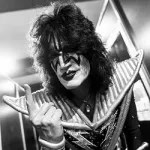
You can read the entire interview @ this location. An excerpt from the conversation has been provided below.

What form will KISS take after the “End of the Road World Tour” ends?

Tommy Thayer:

“KISS itself will not go away. It shouldn’t and wouldn’t because it is such an iconic, important band and brand. The music and imagery are very timeless, as you know. It’s not gonna stop. Sometimes people get the impression that the touring is ending, that somehow KISS is over. If there is any band that can continue for a long time into the future, it’s KISS. I don’t know specifically what’s gonna happen. But undoubtedly there’s going to be business and different opportunities with KISS moving forward.”

Do you think there could be one-off gigs?

“I think that’s possible. I think anything’s possible. Certainly, with technology, going into the future there are all kinds of possibilities as far as virtual type stuff. Even other versions of KISS are possible. Even if that would have to be done a certain way. But it can be done. Anything’s possible. It just has to be done in the right way. There are all kinds of different things. The KISS logo licensing and merchandising. I think that somehow, there has to be some activity to keep the thing going and being relevant and that sort of thing. There’s a lot of possibilities.”

What about your future plans apart from KISS? You now know that touring will wind down. Will we see a Black ‘N Blue reunion?

“The touring part is winding down. But remember that I have been involved with KISS going back way before that. I have been working in the organization for 30-plus years. I have known Gene and Paul both for more than 35 years. Anyway, maybe there’s a role or place for me in their organization moving forward. I really don’t know any specifics on that. But certainly, if the business continues, as it will, I might be involved with that because I am very well-versed and very knowledgeable. I know KISS inside out! Not Black ‘N Blue. Black ‘N Blue had its time. Those guys still do a few things with the band, Jaime and Patrick. But, not that, I don’t think I am going to be playing in another band, necessarily. It doesn’t really appeal to me. Once you’re doing this, at this level of notoriety, there’s really nowhere to go in a lot of ways. Plus, as I get into my sixties, it’s not really something I want to pursue, touring and playing in a band. I was actually thinking in the 90s, or even before that after Black ‘N Blue, I was really thinking more business. Music business, entertainment business, management, production, even then, so I don’t think that will be it either. But maybe something music-oriented or entertainment-oriented.”

Back in the 1980s when your band Black ‘N Blue opened for KISS, did you ever think that your association with KISS would still be going on 37 years later and that you would become the longest-serving lead guitarist of KISS?

“I know. In 1985, we opened for KISS on the ‘Asylum’ tour. We did about 24-25 dates in the US, as you know. I think at the time we were just such huge KISS fans we couldn’t believe we actually got this spot on the KISS tour. That was a dream come true, one of those ‘Pinch me, I can’t believe it’ things. We were so excited. We went out and did those shows and we got the opportunity to meet those guys, obviously. Gene first because he’s more outgoing and chatting us up backstage or at the soundcheck, the first couple of shows. Then I got to know Paul a little bit later because he is a little less approachable at the beginning. Certainly, I have known both of them a long time. And then Eric Carr and Bruce Kulick at the time. I never aspired, honestly, to be in KISS or thought that would even be a possibility. I really didn’t. Even when I started working for them behind the scenes before the Convention tour started and I started on KISStory. This is like ’94…’93-’94. I never aspired to be the guitar player of the band. I was really into pursuing the business side of music, production and management.”

The first KISS album you appeared on was “Hot in the Shade” in 1989.

“I did because I co-wrote two songs, ‘The Street Giveth and the Street Taketh Away’ and ‘Betrayed’. But it was funny after the record came out, ‘Hot in the Shade’, and I heard those tracks. I can still hear my guitar in there from the demo because that album was really all taking demos… You know, they were great quality demos and really just spiffing them up a little bit and putting them out. Which is fine because back then when you recorded demos, they were like the actual tracks almost anyway. Except some of them had drum machine and then Eric Carr came in and actually played the drums after the fact on some of those tunes. I know that the two tunes I co-wrote with Gene, Gene and I demoed those, and they sound almost exactly like they ended up on the album. But with Eric Carr playing the drums and then Bruce came in and did the guitar and I think he did the solos and stuff, but I still heard my guitar in there. So, technically, you’re right, that was the first KISS record that I appeared on guitar-wise.”

You can read the entire interview @ this location.

Categories
Listen Music Top Stories

Venom’s Cronos on the Norwegian Black Metal Scene’s Culture of Neo-Fascism: “It’s disgusting” – 2022

Metal Hammer: Venom frontman Cronos: “Metallica have had some shit albums – they’d have to admit that.”

You can read the entire interview @ this location. An excerpt from the conversation can be found below.

Venom had a huge influence on thrash metal, and in the mid-80s you had Metallica and Slayer as opening acts on tour. Did you view them as kindred spirits? A threat? Maybe a little of both?

Cronos:

“I hoped they’d be big, because they were good bands, friends at the time, and it was fun on the road. I hoped this scene would get bigger. I wanted everybody to love this music, and the heavier the better. But I never would have thought that Metallica would have had the success that they’ve had. They’ve had some shit albums – they’d have to admit that. But the first three albums, fucking great.”

You’ve said that Metallica’s Whiplash ripped off the riff in Venom’s Witching Hour, but surely Slayer owed a greater debt to you?

“Well, a few years back I was hanging out with Tom Araya at a Slayer gig in Glasgow when he got a phone call from his son, who must have asked him who he was with, because Tom said, ‘I’m sitting with the guy whose career I’ve been copying for my whole life!’ Tom is great, man!”

Back in those crazy days of the 80s, was it all sex and drugs in Venom?

“It was for me! Jeff just wanted to go back to his hotel room for a cup of tea. But fucking hell, I wanted to live that life! I wanted to do that whole rock’n’roll thing, shagging a bird over the back of the tour bus. How can you be a real rock star if you don’t do it all?”

On a purely musical level, did you admire the early Norwegian black metal?

“Definitely. It was so dark and so evil. It was the next generation. But it also created what I call the ‘black metal police’ – all these people going, ‘This band is black metal! This band isn’t!’ And I love this one: ‘Venom aren’t black metal!’ Ha ha! I just wish they’d come up with their own term, like Norse metal. That’s what I say to these guys: ‘You’ve stolen my term, but you’re not really black metal, because black metal is power metal, speed metal, thrash metal, death metal – all the metals together!”

You can laugh about the black metal police, but the Norwegian scene had a culture of violence, criminality, racism, homophobia and neo-fascism. Knowing that Venom’s name was inextricably linked to that scene, what effect did that have on you?

“It was disgusting. People like that, I want to sit them down in front of TV and play the entire The World At War [26-episode WWII documentary] series. Watch that and tell me fascism is a good idea, you fucking idiots!”

You can read the entire interview @ this location.

Categories
History Listen Music New Releases Top Stories

KISS’s Paul Stanley During ‘Creatures of the Night’ Creation: “We had forsaken our fans…We f__ed up. We got lost” – 2022 – INTERVIEW

KISS:

Paul Stanley Revisits ‘Creatures Of The Night’ with uDiscover Music!

You can read the entire interview @ this location. An excerpt from the conversation has been provided below.

How would you describe the place the band was at during the creation of Creatures of the Night?

Paul Stanley:

We were coming out of a coma. I think we suddenly realized how much we had veered away from what the band started as and what we believed in. We had really become complacent and more concerned with enjoying some vapid rewards of success than making great music and staying true to our roots. We were stumbling around, and suddenly, I think we just found ourselves going, “What the hell are we doing here? And look what we’re on the verge of losing.”

We had forsaken our fans, and we had, in a sense, betrayed the people who made us what we were. That’s a shock to wake up from. I think we had to go, “Hey, we f__ed up. We got lost.” We had this great [new] drummer, Eric Carr, and we thought, “For God’s sake, let’s make an album that’s rooted in the music we love and really make a declaration of rebirth.”

Eric was still new at the time, and now there was a new guitarist, Vinnie Vincent. How did they affect the sound of the band?

Clearly, Eric was a drummer in the tradition of a lot of British rock drummers, much more so than any American counterparts. It gave us the opportunity to tap into the roots of what inspired us. He was disheartened by what we had done. He thought he was joining a rock band, and we wound up doing The Elder. So, he was thrilled to be doing Creatures.

Vinnie wasn’t a member of the band when we did Creatures, so we were literally auditioning guitar players in the studio and having them play on different tracks. We had Robben Ford, who’s a phenomenal guitar player, play on “I Still Love You,” and Steve Farris played the solo on “Creatures of the Night,” which is one of the great solos. Vinnie co-wrote some of the songs and was a great person to co-write with, but he was never considered a band member until we were faced with a tour and had no choice but to grab somebody.

For Creatures, you wrote a bunch of songs with Adam Mitchell from The Paupers, among other things. A guy who was best known at the time for writing songs for Olivia Newton-John might have seemed like a surprising choice for your collaborator. How did that partnership come about, and what was your working dynamic like?

We’ve always had the philosophy that doing things the normal way isn’t how we operate. We’ve broken those rules so often I could give you a shopping list. [Creatures producer] Michael James Jackson was so left field that most people just scratched their heads at the idea of us being involved with somebody who had done the Canadian band Red Rider and also Jesse Colin Young from The Youngbloods, things that didn’t have any real clear relationship to what we were doing. But Michael felt right. [KISS’S manager] Bill Aucoin had no experience as a band manager; he’d never done anything like that. So, we’ve always trusted our instincts.

And Michael suggested Adam. Adam was just a terrific songwriter. I’m not one of those people who believes that as a writer, you stay in your lane. If you’re a good writer, you can write anything. Adam and I got together and knocked out a bunch of really good songs. I’ve always believed that there had to be a signature song for each album. Most of the time, it was a song that I would come up with. “Love Gun,” for example. “Detroit Rock City.” We needed a song that encapsulated, and kind of gave a preview as to what the whole album was, both in terms of attitude and sonics. Adam and I wrote “Creatures” quickly. From “Creatures” we did “Danger,” and we just had a ball writing.

You can read the entire interview @ this location

Paul Stanley is currently promoting KISS’s Creatures of the Night boxset. Check our previous post for more info @ this location.

Categories
Listen Music New Releases Top Stories

KISS’s Gene Simmons Talks 1982’s ‘Creatures of the Night’ – Ace Frehley – Vinnie Vincent – 2022

In a brand new interview with Guitar World, Kiss co-founder Gene Simmons talked about the band’s 1982 album, Creatures of the Night.

You can read the entire interview @ this location. An excerpt from the conversation has been provided.

An audio version of this story is available via our full in bloom YouTube channel @ this location.

INTERVIEW EXCERPT:

“By the time Creatures happened, Ace was already gone,” recalls Simmons. “Ace doesn’t appear on a single song on Creatures of the Night. His only appearance was in the promotional shots, and he did us a favor by appearing in the I Love it Loud music video. But even that was a mistake because he clearly didn’t know the song and had to fake his way through the entire thing. So, not only were we feeling very unsure of what we were doing, we didn’t even have a lead guitarist.”

“We had to find a workaround for the Ace issue,” recalls Simmons. “And that wasn’t easy because, for all his issues, Ace was a unique player. We held open auditions out in L.A., and everyone from Richie Sambora to Slash to Doug Aldrich to Punky Meadows came down. None of them were a fit, but we couldn’t wait around for the right person.

“So, we went ahead and recorded Creatures with session players. Guys like Steve Farris, Robben Ford, and a guitarist who at the time was called Vincent Cusano.”

On if he thought Vinnie Vincent’s contributions on Creatures of the Night were overstated:

“I do feel Vinnie’s contributions are overstated,” asserts Simmons. “I feel they’re overstated, and I’ll tell you why: to begin with, that’s not even Vinnie playing on the entire record. He played on a few tracks in total. And Vinnie will often talk about his songwriting on Creatures, and yes, he helped with several, but the contributions of Adam Mitchell are there, too. But even that was an issue because we were writing at Adam’s house, and Vinnie cornered me and said, ‘Hey, forget about this Adam guy. I should be writing the songs. We don’t need him.’”

“One of the first things we came up with was I Love It Loud. I was living with Diana Ross, and I was at her Beverly Hills house one day, and I remembered coming up an early version of that song.”

“It was a simple thing – I was referencing the melody of The Who’s My Generation, and I came up with the chords and the melody. And I remember calling Vinnie, getting him involved, and he actually wrote most of the lyrics.”

“I remember that Vinnie brought in Killer.” recounts Simmons. “We liked it, but he fought tooth and nail over the solo. Vinnie wanted to make every solo this massive thing. But Paul and I would bring him specific solos; we gave them to him and asked him to play them verbatim, but he refused.

“He didn’t want to do that, but honestly, everything that Vinnie did sounded like Yngwie Malmsteen on crack. You know, the kind of stuff that the rest of us normal human beings hate. It was ridiculous, and it certainly wasn’t Kiss.”

“It got to the point where we had to put our foot down,” Simmons continues. “We said, ‘Look, you’re going to play the notes exactly as we tell you to.’ And that’s how the solo for I Love It Loud came together. We didn’t need to be ripping apart the puzzle pieces of his solos and trying to splice them together, and that’s what was happening.

“We didn’t feel we needed to be in a situation where we were fighting with Vinnie Vincent over how the songs should sound. He wasn’t a member of Kiss – to remind everyone, Vinnie Vincent was never an official, legal member of Kiss. To this day, Vinnie Vincent has never signed a contract with Kiss.”

Reflecting on the time period, Simmons said:

“When I look back, despite his demons, in some ways, Ace was right,” admits Simmons. “We did need to make a rock record. And he had said that all along; Ace had said that The Elder was not the record that Kiss should make, and he was right. But the thing is, we had people around us telling us it was a good idea, and things didn’t go according to plan. We got off track. That happens in bands, and Kiss is no exception. So, where Ace was wrong was, he didn’t stick with the band.”

You can read the entire interview @ this location.

Gene Simmons is currently promoting KISS’s Creatures of the Night boxset. Check our previous post for more info @ this location.

Categories
Funny Listen Music New Releases Top Stories

Def Leppard to Nickelback: “We get to pass the baton to you for being the most hated band” – 2022 – Chad Kroeger INTERVIEW

Jorge Botas: Had a chat with Chad Kroeger of Nickelback, to talk all things “Get Rollin'” and why and how they became one of the most “hated” rock bands on the planet!

You can listen to the entire interview via the embedded YouTube clip below. An excerpt from the conversation has been transcribed.

On why Nickelback became the world’s most hated band:

Chad Kroeger:

I’ve got a pretty good grasp of where things kind of went off the rails for us. So, I think that because we write so many different kinds of music; I think that if you were listening to a radio station any time between 2000 and 2010, ’11, ’12 even, we were kind of tough to get away from. Because if you didn’t want to hear it, and you changed to a different radio station, you’d probably hear it on that and then change to a different radio station, you’re probably going to hear it in so many different places. We were really tough to get away from. And that’s not my fault (laughs), we just write the songs. And so, with that comes backlash.

Then what happens is, then comedians start making jokes. Then it starts making it on to TV, and then it makes it into movies and stuff like that. And then it just turns into this wave of, like, “Oh, it’s fun to pick on them.” It’s an easy joke. And I get it, I understand. There are bands that when I hear them on the radio, and they’re very popular bands. I mean, we all have those. No one is exempt from that. There are certain bands where you just hear them, and you just don’t like them. Half the world may love them, and I’ll just be, like, “No, I just cannot hear this band one more time.” And just like everyone else does, I change the channel.

We kind of became the whipping boy of the music industry for a while there, but, you know, whatever. It’s just part of the history of the band.

It’s funny because we were at the American Music Awards, we were presenting, and we presented to Def Leppard. When we walked backstage afterwards, Joe Elliott and Phil Collen turned to me, and they were just, like, “Dude, thank you so much.” I’m, like, “For what?” They were, like, “For taking the trophy. We get to pass the baton to you for being the most hated band in the world now.” And I was just, like, “Oh, yeah, because I want that.”

We went for dinner with AC/DC in Chicago years and years and years ago, and this whole thing came up. Brian Johnson said when they released ‘Back In Black,’ they were the most hated band on the planet. So, I feel like we’re in good company.

Later in the interview, Chad talked about working with legendary producer Mutt Lange:

When we were working with Mutt, doing the ‘Dark Horse’ record, there was some stuff on there, where I was like, “How in the hell am I going to sing this live?” He said: “That’s not my job. My job is to make you guys sound awesome in here. You have to figure that out.”

Nickelback released their tenth studio album, Get Rollin, on November 18, 2022. The lead single, “San Quentin,” has been embedded below.

Categories
Listen Music Top Stories

Ian Gillan Talks Black Sabbath’s ‘Born Again’: “‘Trashed’ is one of my favorite rock and roll songs of all time” – 2022

In a new interview with Spain’s RockFM, DEEP PURPLE singer Ian Gillan was asked if it’s true that he broke the sole BLACK SABBATH album he appeared on, 1983’s “Born Again”, when he first got a copy of it. He responded (as transcribed by BLABBERMOUTH.NET ): “I didn’t break it. I threw it out the window of my car. [Laughs]

“Look, I was disappointed,” he explained. “I didn’t have the mentality of all the guys in BLACK SABBATH. I loved it. I had a fantastic year; it was insane. But when we finished the mixes… I still have a cassette at my home of the monitor mixes of ‘Born Again’, and it sounds fantastic — just on a cassette. And that’s the last thing I heard in the recording studio. When I heard the album, I went, ‘What is this?’ The bass rumble was a bit too much for me.

“There’s a famous line in a famous movie called ‘This Is Spinal Tap’ that has two or three references to BLACK SABBATH in it,” Gillan added. “And I don’t know where these may have come from [laughs], but one of them was ‘This album in unplayable on American radio,’ because of the bass end. And so it was — unplayable on the radio.

“I was disappointed in the final production mix,” Ian clarified. “I don’t know what happened between the studio and the factory, but something happened. So that was a disappointment. Having said that, I love some of the songs on there. And ‘Trashed’ is one of my favorite rock and roll songs of all time, and even more so because it’s a completely true story. [Laughs]”

You can read the entire article @ this location.

MORE on full in bloom:

Black Sabbath ‘Born Again’ Cover Designer Steve ‘Krusher’ Joule: “I sat back, shook my head and chuckled”

Ian Gillan Talks Backstage Tour Riders + Dressing Room Tour + Shares Black Sabbath/Spinal Tap Moments

Categories
Listen Music New Releases Top Stories

Alice Cooper Guitarist Kane Roberts: “I would think that Nita (Strauss) may intend to come back” – 2022 – INTERVIEW

Guitar World: Kane Roberts on rejoining the Alice Cooper band following Nita Strauss’s departure, adjusting to a Kemper and the revival of his fabled machine gun guitar.

You can read the entire interview @ this location. An excerpt from the conversation has been provided below.

To bring fans up to speed, how did you end up on stage with Alice Cooper again?

Kane Roberts:

“Well, it was basically that Nita [Strauss] was going to take some time and play with Demi Lovato. And they talked about it, which was amicable; nothing was contentious about it.

“So, I guess Alice was thinking of who he’d like to get to replace Nita, and somebody said, ‘What about Kane?’ So, Alice called me and said, ‘Hey, you want to do the fall tour?’ And I said, ‘Okay, let’s talk about it.’ From there, he explained what happened and that Nita was taking some time, so I said, ‘Okay, I’ll do it.’”

During your first run with Alice, you brought elements of aggression and danger to his music, which have never left. How do you measure your impact on Alice’s sound?

“When I first joined Alice back in the ’80s, I sat down with him before doing that Nightmare Returns Tour, and I said, ‘Look, you don’t want to sound like Alice survived rehab. You want to come back as a nuclear version of who you were.’ And there was such powerfully violent music out there like Ozzy Osbourne, Van Halen, and all these amazing bands, and we had to compete on that level.

“So, that’s how Alice and I generated that first tour and the heavy records that came after. That power and the response we got from the audience were amazing, and it showed that many people didn’t expect it. A lot of people were worried about what Alice would sound like, but as soon as we came out, we hit them hard, and that silenced everyone.

“I remember that even the classics had a heavier feel. We decided with Shep Gordon to pay homage to the early stuff and keep the feel, but we made it heavier. That Detroit rock, classic vibe never left. But the power that Alice displayed during those two tours we did together, I’d say that it’s still vital and more current in many ways. So, I think, yeah, I think an influence that stayed there.

“But, having said that, Alice has some insane creatives working with him. I may have had an impact, but Alice is a genius, and he’s more than covered when it comes to having people around him and being in a creative environment.”

I’d be remiss if I didn’t bring up the machine gun guitar. What challenges did you face trying to resurrect it?

“At first, they looked at making a new one, but there wasn’t enough time because it was complicated. So, they found the original – there are three out there – but they found the original. It was up at the Hard Rock Cafe in New Orleans for a long time, and then the flood happened, which ruined it.

“So, they chucked it into this warehouse, the neck got cracked, and it was jacked up pretty bad. But we wanted to find a way to have it in the show, so I had my luthier fix it up as best he could. He did a great job, but it’s unplayable.

“If you were at any of the shows, you’d notice that I didn’t play it. It was roughed up pretty good after that flood, and there wasn’t enough time to get it working. But they could at least assemble it and make it look functional.”

Back in the day, it shot fire. But this time, it looked as if only smoke was spewing out.

“Yep, that’s true. We wanted it to shoot fire, but we would have had to hire a pyro guy to come on tour, and then each city, we would have had to have somebody come out and watch the whole thing. So, what they did instead was they used this cryo-smoke stuff.

“So, for me, when I played the thing in the ’80s, it felt like I had this flamethrower gun guitar. But on this tour, I had a fire extinguisher gun, so I guess I was putting out the fires instead of starting them this time. [Laughs].

“But overall, it was cool because Alice and I have a tongue-in-cheek attitude toward it. But we both love the energy that the guitar brings, and it’s important to my image and my era of the band. I’m glad we were able to make it work in some way.”


At the onset of this tour, you were looking at this with an open mind but had no definitive future plans with Alice. Has that changed?

“Well, I’m open to a lot. I would think that Nita may intend to come back. But she also has some real career decisions because she’s got a viable solo career, and she’s still out there killing it with Demi Lovato, too.

“So, I’m sure there are a lot of plates that must be spinning, and we’ll see what happens. But yes, I’m open to any discussions. It comes down to me, Alice, Shep, Bob Ezrin, and all the people in the band; we’re all friends and love each other. So, it’s just gonna depend on how things shake out from here on out, but my initial notion was that I would sign on for five or six weeks, and that might be it.”

You can read the entire interview @ this location.

Categories
Health History Music New Releases Top Stories

Red Hot Chili Peppers’ Anthony Kiedis on Rick Rubin & Drug Addiction: “I felt whole by putting these things in me, until I had to pay the toll” – 2022 – INTERVIEW

The Joe Rogan Experience:

Anthony Kiedis on Under the Bridge, Rick Rubin, and Addiction.

You can listen to the entire interview @ this location. An excerpt from the interview has been transcribed below.

INTERVIEW EXCERPT (transcribed by full in bloom):

On Rick Rubin:

Anthony Kiedis:

He’s (Rick Rubin) another person, if you look at his origins, it’s no accident that he ended up being the person that he is. Single child, out in the suburbs of New York City, I think, Long Island, and he had an aunt. Very cerebral boy, already a very smart kid, but living a boring, culture-free life. He had an aunt that lived in Manhattan, who loved her nephew and every weekend, or every other weekend, he would go spend with her. She was cultured. She was like: “We’re going opera. We’re going to the symphony. We’re going to the museum. We’re going to see all this different stuff.”

I met him in maybe 1985 and we (Red Hot Chili Peppers) were flailing. I was lost in a retarded sea of drug addiction. I was basically a junkie but still showing up for work from time to time, which was the basement of the EMI studios on Sunset Blvd. They gave us a little basement to rehearse in. They had signed us, but we were going nowhere very slowly, couldn’t get out of our own way. But we were still making a buzz; there was still something exciting about us that caught people’s attention.

It caught Rick Rubin’s attention. He was with the Beastie Boys, and they were exploding with success and greatness, writing incredible music. So, Rick brought the Beastie Boys to our dingy little rehearsal spot. He sat there, and we rehearsed, while they watched. They’re on these dirty couches watching us, and we went through our songs. Rick stood up and said, “We’re going to go now.” I was like: “Ok, do we talk again? What’s going on?” “We’ll get back to you,” didn’t see him for years.

Years and years and years went by. Eventually I got clean, and he came back and said, “Let’s make a record.” But I said: “What happened that day? You came and we played, and you disappeared. I never talked to you again.” He was like: “I thought somebody was going to get murdered in that rehearsal space. I thought somebody was going to die. I had to leave.” That’s how dark we had become. That’s how dark I had become is he was afraid someone was going to die, and it was time to leave.

Drug Addiction:

I think the road was already in me from birth, a combination of being predisposed physically and then emotionally I developed the tendencies that I needed to squash some of the noise. Spiritually, a little depleted.

I started smoking weed and loved it. It was, at the time, a very fun and subversive thing to be a part of. Like today, it’s pretty damn common, but then it was very outlaw as a young teenage boy. Years went by and there was no problem. Then I started introducing narcotics at a pretty young age and really had nothing to say about it anymore. I was like the caboose of the train, just going wherever the hell that train said to go. It was interesting and exciting, but it was also painful as hell. It was just like, in the end, this is a life of suffering. Fortunately, my destiny was meant to survive that.

It isn’t really events or advice or anything that gives you the window to step out of that, but it’s a little gift from the cosmos that just makes you look at yourself and say, “I’m going to give you a chance; I’m going to give you an opportunity to put in the work to get better if you so choose, if not, carry on.”

Narcotics of choice:

Of choice, I would have to say the combination of heroin and cocaine. It had nothing to do with rock n’ roll or impress or put on a pretense. It was happening around me in my world. It was exciting and dangerous, like, everyone’s afraid of that. I think I’ll do that thing that just the word scares people. But it was also a way of checking out in the same way one person will sit down at a bar to have some beers and just not stop. That allergic reaction to the sensation of finding your medicine. I had that reaction.

I felt whole by putting these things in me, until I had to pay the toll. You know, it’s like you steal from Peter, you got to pay Paul the next day, and it’s a terrible paycheck to write. Yeah, it was finding the thing that I thought was going to make me well but really it was just killing me.

I think I was twenty-seven the first time I was able to put in the work and get sober. Then I went to my young thirties and kind of forgot where I came from and forgot the process of maintaining. It’s like, you get physically fit, but it’s not going to be for life. You’ve got to show up. Or anything else, your craft – you put it down, it fades. I put down the craft of sobriety, and it opened an opportunity. I ended up going out there for a bunch of years, like, five years, which was even worse because now I knew that there was a solution. I was just ignoring it. So, there was nothing fun about it. Then the window came back, and I had another chance to commit to sobriety, and I did. That was twenty-one years ago.

How he got sober the first time:

My best friend died (bandmate Hillel Slovak died from a heroin overdose in 1988), which did not instigate sobriety. It definitely destroyed me emotionally, but I continued to use after he died. Then I got to the point where I couldn’t turn off the noise with drugs and alcohol. Literally, flooding my body with substances and still wide awake, and I was not getting the desired effect. I was like, “This is terrible; I’m putting all this poison in me, and I’m still here.”

I called up a friend. Rehabs were not a thing at that time. I called up a sober friend, and I was like: “What are those rehab things? I’ve got to find one.” He’s like, “The only one I know of is very expensive, ten grand,” which in the ’80s, for a struggling musician, was like, “I have ten grand, that’s exactly what I have.” And I spent it. I gave my last ten grand – my only ten grand ever – to a rehab.

I went and checked in and there were thirty dope fiends in the room from all walks of life but all with a common sickness. The counselor said, “I’m looking at thirty of you, and, stats-wise, one of you is going to get sober.” I was like, “Get out the way cause I’m taking that spot.” I was such a little ego maniac, just like, “I’m taking that, please, the rest of you can go back to where you came from.” There was like a guy from the SWAT team. There was a professional athlete. There was just every variety of person in there. I was like, “I’ll take it.”

Then I realized there was a process to it, and there’s a being of service aspect to it. There’s a becoming humble aspect to it, and that was the beginning of me taking many years to go from being a complete idiot to only a partial idiot.

Categories
Listen Music New Releases Top Stories

Judas Priest’s Rob Halford on the ’80s: “We’d sell half a million records in a week in the US alone!” – 2022 – INTERVIEW

Metal Hammer: Rob Halford on Judas Priest shaping heavy metal, playing Live Aid, coming out and being immortalized on The Simpsons.

You can read the entire interview @ this location. An excerpt from the conversation can be found below.

EXCERPT:

1980 was an unbelievable year for metal. Priest released British Steel alongside Ace Of Spades, Iron Maiden, Back In Black, Heaven And Hell, Blizzard Of Ozz – so many classics of the genre. What was that year like for you?

“So exciting. The 80s was a decade of decadence, and the mix of heavy metal from Judas Priest to Mötley Crüe was amazing. For us to make a record that went on to be a standard-bearer was such a big moment, it stands alone; we’ve never made another record like it, and we never will.

The industry was thriving; we’d sell half a million records in a week in the US alone! There was this sense of economic security for a lot of people, so shows were selling out and they were buying t-shirts and records, cassettes, all this crazy excitement… you just got caught up in it all.”

Speaking of the 80s, Live Aid in 1985 was a once-in-a-lifetime event, with simultaneous concerts in London and Philadelphia, and you guys and Sabbath were the only bands representing metal that day…

“…And we both played Philadelphia! Ironic, isn’t it? There were no metal bands at Wembley that day, how mad is that?! Bill Curbishley was managing us, and they said they wanted The Who. Bill turned around and said, ‘OK, but you’re also having Judas Priest.’ Bob Geldof knew us, so that was fine.

But the fact that you had two of the prominent British heavy metal bands playing a stadium in America and being beamed around the world was another milestone for metal. We were being heard in some people’s living rooms for the very first time! I spent most of the day with the punters out the front, banging my head and screaming, ‘Madonna! Mick! Planty! Jimmy!’ – it was one great talent after the next. It was a once-in-a-lifetime event, and I was there. I was there, man!”

What sort of mindset were you in when you left Priest in 1992?

“Let me start by saying I’m not the first lead singer to leave a band. I call it LSD: Lead Singer’s Disease. I always have to emphasize that it was a classic case of communication breakdown. After the Painkiller tour, we were like dead dogs, we were exhausted. I’d said years before that at some point I might want to wander off and do something different and they’d all given me their blessing. It wasn’t cunning, or unexpected, it was just the way things went.”

Did you ever listen to Priest when Tim ‘Ripper’ Owens was in the band?

“It’s cool to ask me this question, and I have an honest answer: I’ve never listened to Jugulator, and I’ve never listened to Demolition. Not that I’ve avoided listening to them; the fact is that I wasn’t in the band, Tim is a great singer and a good friend of mine, but I wasn’t drawn to Priest at that time of my life.”

You can read the entire interview @ this location.