Categories
Top Stories Tour Dates

Suicidal Tendencies Kicks Off US Tour w/ Crowbar / Havok on Feb. 22nd

WORLD GONE MAD US TOUR FEBRUARY-MARCH 2017

Suicidal Tendencies will kick off their US tour at The Observatory in Orange County on Feb 22nd with special guests Crowbar and Havok.  AND let’s not forget, it’s Suicidal with the great Dave Lombardo (Slayer) on drums!  Be sure to check out Havok.

Listen to Havok’s new single, “Ingsoc”:

HEADLINING TOUR with Special Guests Crowbar and Havok

Feb 22 Santa Ana, CA – Observatory

Feb 23 San Diego, CA – Observatory

Feb 24 Tucson, AZ – Club XS

Feb 25 Farmington, NM – Top Deck

Feb 27 Dallas, TX – Gas Monkey

Feb 28 San Antonio, TX – Paper Tiger

Mar 1 Houston, TX – White Oak Music Hall

Mar 3 Atlanta, GA – Masquerade

Mar 4 Ft. Meyers, FL – Harborside Events Center

Mar 5 Tampa, FL – State Theatre

Mar 7 Memphis, TN – New Daisy Theatre

Mar 8 Lawrence, KS – Liberty Hall

Mar 10 Denver, CO – Summit Music Hall Complex

Mar 11 Salt Lake City, UT – Complex


Categories
Music Top Stories

Prince’s Estate Inks Deal w/ Universal to Release Music from the Vault

All the rumors are true, Prince’s giant vault of unreleased music will finally see the light of day, or at least a portion of it. Yesterday (2/9/17) it was announced that an agreement between the singer’s estate and Universal Music Group had been reached giving the label access to Prince’s music recorded after 1995. Universal had previously inked a deal with the estate to become the worldwide publishing administrator for Prince’s music. While it is still unclear as to what the full contents of the vault consist of, the New York Times indicated the material being released features outtakes, live and demo recordings. But soon after Prince’s death, Paisley Park employees insisted that there are thousands of hours of live and studio material, jams, random songs and entire unreleased albums.

Over the last few weeks there have been several hints that on Grammy night, this Sunday, Prince’s music from the Warner Brothers era will debut on several streaming sites. This will include some of his biggest hits like “Purple Rain”, “1999”, Little Red Corvette” and many more. The unreleased material, however, will not be available for streaming…..at least not yet.


Categories
Entertainment Music Top Stories

Sammy Hagar and Adam Levine Introduce Tequila-Blend, Mezquila

After making more money in the tequila business than he ever did in the music business, it’s only logical that Sammy Hagar would get back into the booze business.  There’s one difference, this time he’s launching it with a partner, Maroon 5’s Adam Levine.  In 1996 Hagar started Cabo Wabo Tequila and in 2008 sold an 80% stake for $80 million.  Two years later he sold the remaining 20% stake for $11 million.

“When we came up with that name — mezquila — the whole road opened up. We know what we’re going to do. It’s the first mezquila. We’ve invented a new product. It comes on like tequila and you smell a little bit of smoke in it, but is toned down to where you get a sweet finish. It’s taking tequila to another level. When you blend the two you get a higher spirit, a brand new taste.”  Tequila is a type of mezcal made from blue agave, while mezcal is made from other forms of the desert plant.  I just always thought mezcal was that shit-tasting bottle from Mexico with the worm in it.  Personally I drank a bottle and ate the worm.  I did hallucinate but I think that’s because I drank the entire bottle.  I digress.

Sammy Hagar and Adam Levine became friends over their shared love of tequila. One night on a beach in Cabo, Mexico, their creative juices were flowing and they combined mezcal with tequi­la, discovering a taste they could only describe as a revelation. They brought together an expert team to develop the perfect blend, and created, a higher spirit. Afterward, Jack Daniels, Marco Monroy and Infinium Spirits, true experts in the tequila world, each with decades of experience, were reunited with Sammy.

With a price tag of over $50 a bottle, the 80-proof blend will be distributed, in the 1st quarter of 2017, to select markets including Las Vegas, New York, California, Texas and Florida.


Categories
Music Top Stories

Kreator “Gods of Violence” Worldwide Chart Positions Revealed

The new release from Kreator, “Gods of Violence” hit the charts in 20 countries.

Search our store for Kreator items.

Categories
Listen Music Top Stories

Hear Jerry Cantrell’s New Song for John Wick: Chapter 2

Alice in Chains guitarist and main songwriter has a new song that will be featured on the soundtrack for John Wick: Chapter 2 film, starring Keanu Reeves, Laurence Fishburne and Common.  The new song plays during the final credits.

John Wick: Chapter 2 debuts to movie theaters tomorrow, February 10th.

As far as Alice in Chains news, the band has entered the studio to start working on their follow-up to 2013’s The Devil Put Dinosaurs Here.

Categories
Biographies Gear Guitars Music Top Stories

John Sykes – Guitarist, Wiki Info, Thin Lizzy, Whitesnake, Blue Murder, Tygers of Pan Tang

John James Sykes is a well-known English rock guitarist famous for his work in Whitesnake, Blue Murder, Thin Lizzy and Tygers of Pan Tang. Sykes was born July 29, 1959. He joined the band Tygers of Pan Tang in 1980, releasing the album “Spellbound” the following year. He would go on to record another album, “Crazy Nights,” released in 1982, and participated on two tracks for the band’s fourth album, “The Cage,” before leaving the band to audition for Ozzy Osbourne’s band after the death of Randy Rhoads.

Upon failing to get the gig with Osbourne, Sykes was recruited by former Uriah Heep frontman John Sloman for a new band called Badlands. The project would be short-lived, never releasing any music officially, although a number of bootlegs of rehearsals do exist. Later that year, at the age of 23, Sykes was invited to join Thin Lizzy by the band’s frontman Phil Lynott. He participated in the recording of the band’s final studio album, “Thunder and Lightning,” which included the Sykes-written track, “Cold Sweat.” It would be the first evidence of Syke’s tremendous songwriting ability, which would be revered later in his career.

Sykes toured with Thin Lizzy through the fall of 1983 to promote “Thunder and Lightning.” The band recorded several performances from the tour which would be used to put together a live album called “Life.” The album would be the band’s last, as they disbanded immediately after the tour.

During Sykes’ time with Thin Lizzy, he caught the attention of Whitesnake frontman David Coverdale, who invited him to join the band after the European release of their 1984 album, “Slide It In.” Sykes re-recorded some guitar parts for the album’s US release, and toured in support of the album. Sykes would co-write the majority of the tracks for Whitesnake’s 1987 self-titled album, laying down the guitar tracks and recording most of the backing vocal tracks.

The album would make a name for Sykes as a songwriter, but Coverdale fired the entire band before the album was released, citing matters of ego. Adrian Vandenberg was brought in to replace Sykes, and re-recorded the solo for “Here I Go Again,” the only guitar part on the album that isn’t Sykes. “Whitesnake” would go on to become the band’s most successful album, reaching #2 on the Billboard albums chart, which was simply unheard of for a hard rock album at the time. The album sold more than 8 million copies in the US alone, and produced several hits which Sykes had co-written.

After being dismissed from Whitesnake, Sykes went on to form Blue Murder with former Cactus / Vanilla Fudge drummer Carmine Appice and Tony Franklin, who played bass in The Firm. The band recorded a demo with Ray Gillen (Black Sabbath and later a different Badlands), but an executive at the band’s label convinced Sykes to dismiss Gillen and handle the vocals himself. The band enjoyed moderate success with it’s self-titled debut album, but the 1993 follow-up, “Nothin’ But Trouble” was not received well and the band would break up after two albums and a live release.

After Blue Murder, Sykes began recording and touring under his own name, releasing the albums “Out of My Tree” in 1995, “Loveland” and “20th Century” in 1997, and “Nuclear Cowboy” in 2000. In 2004 Sykes released the live album “Bad Boy Live!,” in which Sykes covered a number of the greatest hits from all of his bands and solo material. None of Sykes’ solo releases enjoyed a great amount of commercial success, though critics lauded his work.

In 1996, Sykes would reform Thin Lizzy with Scott Gorham, Brian Downey and Darren Wahrton. In addition to handling guitar duty, Sykes also handled the vocals as the band’s singer Phil Lynott passed away years earlier. The band has toured off and on ever since, releasing a live album called “One Night Only” in 2000. In July 2009, Sykes left Thin Lizzy, saying he wanted to get back to playing his own music.

Categories
Interviews Music New Releases Top Stories

Grim Reaper Vocalist Steve Grimmett – The full in bloom Legacy Interview – See You in Hell

Interview with Grim Reaper Vocalist
Steve Grimmett

full in bloom: What have you been up to?

Steve Grimmett: I’ve done several live recordings…..I hope……I haven’t listened to them yet…..We want to release a new live album from Steve Grimmett’s Grim Reaper, later 2011, sometime before summer. I’m not really doing anything with SG’s Grim Reaper, until later in the year, cause I’ve got to have a back operation, so I won’t be able to do much.

full in bloom: How long will it take to recover?

Steve: At least six weeks and then we’ll see how that goes. We’ve had to cancel a number of shows already, but I think we start either at the end of August or early September. We’ll play Greece…..we’re coming to America to do a show as well, I think we’ve got Brazil again, Bulgaria, a lot of places this year that I haven’t played before.

full in bloom: Can you give us a little background on how you became a musician?

Steve: I don’t really know; I just kind of fell into it. A girlfriend caught me singing in the bedroom. A couple of weeks later, she had gotten me a gig with a local band. It didn’t really last that long, to be fair. From there, several bands, Medusa being one of them. I suppose I got hooked in that respect, but I don’t know. I don’t think I ever thought of it as a career. Then obviously, we started to do some things in the States with Grim Reaper. It never really dawned on me that I would be doing it full time.

full in bloom: Was there something else you wanted to do for a career?

Steve: No….No….nothing at all, really. (laughs) I was going to go into the family business, so I never had to think about anything else. The actual business was my biggest hobby and still is.

full in bloom: What is it?

Steve: Radio controlled model aircraft. It’s been a lifelong passion for me. I suppose my father was one of the founding members of radio control equipment, back in the early 50’s.

full in bloom: Did your folks have their own shop?

Steve: Yeah, they did and that was basically what I was going to look after. I didn’t (laughs)……I got into this music stuff.

full in bloom: You became a rock star by accident.

Steve: It was, too. I’m not sure if you know how it all started.

full in bloom: Wasn’t there a battle of the bands?

Steve: Well, that wasn’t really it either. The battle of the bands was just something we entered into and then won. The prize was 24 hours in a 24-track studio. I had already worked for the band Chateaux; I had done a single for them. Then they asked if I would do the album with them because they didn’t have a singer. I was just a hired gun. In between the single and doing the album, Grim Reaper had won this competition and then recorded our demo….and I took it with me when I went to do the vocals on the Chateaux album and gave it to Ebony Records. Six or seven weeks later they signed us. Then a record store in New York, called Zig Zag, got a hold of the import and took it to Walter O’Brien (Concrete Management), who eventually became our manager. I think he owned Combat Records at the time. He got in touch with Ebony Records because he wanted to release it in the States. Ebony Records said they would only go with a major, so then Walter took it to RCA and that is how we got our deal in the States.

full in bloom: Anything stand out from those Chateaux recording sessions?

Steve: It was the first time I had recorded an album in a 24-track studio. It was the biggest studio I had ever been in….before that I had only been in demo studios. I did it all for the experience. I didn’t want to upset the apple cart with Grim Reaper. I had talked to Nick (Bowcott) about it and asked him what I should do about it and he said that I should do it for the experience and that’s exactly what I did.


full in bloom: Do you remember what the budget was for the Grim Reaper album, “See You in Hell?”
Steve: I don’t, because from the day we signed our deal, we were being ripped off. I have no idea what the album cost. The whole thing was recorded in four days. We were well rehearsed. It was pretty much recorded live with a few overdubs, then the vocals were redone and that was it. It was a pretty easy thing to do, but there was no real budget. Really, we didn’t have a real budget until we did the third and final album with RCA, “Rock You to Hell”. We had originally recorded that one with Ebony Records but the recording was so bad that RCA refused to release it. Then we got into the legal battle with Ebony Records and eventually signed over to RCA. That was when we recorded with Max Norman and that album cost well over $50,000, which wasn’t really a huge amount in the 80’s, but it was more than we had ever spent.

full in bloom: The money was well spent. The production was so much better on “Rock You to Hell” than the previous releases.

Steve: Yeah. Well the guy actually worked on our songs. He didn’t just sit on his ass and record us. He produced the songs, changed the songs for the better. He got the best out of us and made us work really hard….and I mean really hard. He made that album sound as good as it does because we played well on it. Plus, he was a mixing engineer as well, so he was there from day one to the last day. It was a vast difference because of the work that went into it. We spent three months recording that one and then another four days to mix it.

full in bloom: What’s the story with your first producer Darryl Johnston?

Steve: He ripped us off for money. He was getting huge advances from RCA, which obviously some of that was supposed to come our way and it never did. He kept us in the dark and we were stupid enough to have not taken it to a lawyer in the first place. We really only have ourselves to blame, at the end of the day. As much as we want to blame Darryl, we only have ourselves to blame. We did finally get away from him, but by the time we did, it was too late….the damage had been done.

full in bloom: Do you have any idea how many copies of “See You in Hell” sold?

Steve: I have no idea. I will find out shortly. I have lawyers working on it now because I have never received any money for it.

full in bloom: You never received a royalty payment for your work on that album?

Steve: Nope. It’s almost sorted out now. But I still don’t know how much I am owed, or how many records we sold.

full in bloom: What are some moments that stand out when you think about the “See You in Hell” recording sessions?

Steve: We had a real good laugh (laughs). We were up there for about five nights and we went out and got drunk for five nights. It was a lot of fun. We didn’t have a thought that the album was going to go anywhere.

full in bloom: You didn’t think that the title track was going to be a hit?

Steve: No, not at all. At the end of the day, it was just about us getting together twice a week and then we had written enough songs to put an album out. It was just a social event really. Then it got released and it did quite well in Europe, which I didn’t even know about until I went to Europe three years ago with SG’s Grim Reaper. Then a month or so later we signed with Ebony and did the deal with RCA. Next thing we are getting phone calls from RCA saying that they wanted us to come out and talk…we want you to do a video. Then we did the video and MTV says that they were only going to show it one time. So they put a questionnaire up after they played the video for the first time on air. They asked the audience if they wanted to see more of this sort of stuff and they were inundated with ‘yes they did’. So we ended up with maximum rotation, which was seven times a day, seven times a week, for about two months.

full in bloom: I remember. I figured you guys would have sold a ton of copies because I remember seeing that video all the time.

Steve: Absolutely. But at that time, we didn’t even think about that sort of of thing. We were out on tour and I know this is a really cliche thing to say, but it was really just sex, drugs and rock n roll. It really was. We had no money, but we didn’t care.

full in bloom: How old were you at that time?

Steve: I think I was twenty-two. We didn’t think we were going to make it and to be fair, we didn’t really. It wasn’t until two or three years ago, where I did this one show…..I was about ready to pack it in because I had just had enough of the music industry. I had done the stuff with Onslaught and Lionsheart, so I had never really been out of it. But I did this festival out in Germany called “Keep it True” and I just couldn’t believe how many people had turned out to see us. So much that it inspired me to write another album with the Steve Grimmett band.

full in bloom: Do you still tour at all?

Steve: No. I can’t tour England and I can’t tour Europe because there really isn’t enough money to support the tour, or make a living out of it. Nowadays, we go out and do a couple of festivals in Europe. They fly us out on Friday and fly us back home on Sunday afternoon. We have a thoroughly good time, we get looked after a bit and we get a little bit of money.

full in bloom: A lot of bands are doing that nowadays. Do they supply the band gear, or do you bring your own?

Steve: It’s all supplied for us, it’s part of the deal. They pay for the flights, they pay for the hospitality. They supply all the backline equipment and we just bring guitars and drum sticks. It’s good fun and you get to see far more people at a festival than a week of touring.

full in bloom: If you didn’t make any money in the early Grim Reaper days, how did you survive back then?

Steve: We all had jobs. I was lucky enough to be working with another part of the family. So I could take time off when I wanted and then I had a job to come back to when I finished touring. I was never really out of a job.

full in bloom: After touring the world, you would come home and work a regular job?

Steve: Absolutely.

full in bloom: That must have been quite a shock to the system.

Steve: Sometimes it was difficult. One thing I can say, having a job to go back to kept my feet on the ground.

full in bloom: You were probably better prepared than some of the bands that came from the 80’s.

Steve: Exactly. You know, I’m not disappointed or upset. I would have liked to have the money, but maybe I’m resolving that situation now. I’m going to get it and maybe now I can appreciate it more than when I was in my early 20’s. I know what would have happened with it, it would have gone straight up my nose. So it’s better I get it now.

full in bloom: What was your inspiration for “See You in Hell?” Didn’t you write the lyrics?

Steve: Yes I did. Nick used to be a university student, so we sometimes wouldn’t rehearse for a number of weeks. One time he came back and said he thought “See You in Hell” would be a great title for a song. I thought it was good. Nick got the riff sorted out, then I was at home one afternoon thinking about it and I actually wrote “See You in Hell” while I was taking a dump. It was about the temptation of Christ, when the devil was trying to tempt him. Then Nick and I got together after a week or so and sorted out the rest of it.

full in bloom: Were there any negative reactions to it?

Steve: Not really; not here. I think in the States we did. They just misjudged us without listening to it. We were just about hammer and horror, none of us worshiped the devil. We weren’t like that at all. The thought of not being able to play some places because they thought we worshiped the devil, really upset us.

full in bloom: Do you remember hearing yourself on the radio for the first time,…..or seeing the video?

Steve: I remember seeing the video for the first time. We had received a rush copy from the record company. I got one on Betamax tape. I remember seeing it at home and thinking holy shit, I just couldn’t believe it. All of a sudden, it all happened so quickly.

full in bloom: Who were your influences?

Steve: Thin Lizzy is what got me into it because I wasn’t really into rock entirely, at all. Then I started listening to Judas Priest with Rob Halford, obviously with Rob Halford….that was something else….I thought his vocals were absolutely stunning. Then I tried it myself and found myself being able to do some of it. But those two bands were probably my biggest influences.

full in bloom: I am originally from Texas and used to go to the Texxas Jams back in the day. Grim Reaper played the 1985 Texxas Jam. What was that experience like?

Steve: Oh….out of this world (laughs). I liken it to the local garage band and then you’re placed in that situation…you just don’t believe it’s real. It was a task getting to the show that day because our chauffeur got us lost. I am really glad, in a way, because when we got there, we had twenty minutes to get changed and on stage. If we would have gotten there two hours before, I would have seen all those people and probably shit myself.

full in bloom: Did you get to meet all the other bands? Wasn’t it the one with Deep Purple and the Scorpions?

Steve: Yeah, we got to meet some of those guys….got to meet Bon Jovi. We couldn’t get to………..I can’t remember…..I think it was Deep Purple that we couldn’t get to, but we met everybody else. What can I say? It was a fantastic day.

full in bloom: What stands out when you think about the “See You in Hell” tour?

Steve: Every show was, in its own way, great. We always met with the fans after the show. We always made sure to get out and shake hands with the fans, sign stuff…and I still do it to this day. For us, the whole thing was a stand out because it was the first time we had been to the States. It was our first time to go to New York, see the Twin Towers, the Empire State Building…everywhere we went we would go see the local monument, so for us, we were always walking around with our mouths open because it was just awesome.

full in bloom: What was your initial impression of the United States?

Steve: Just how big it was because we were all country boys. I never really dwelled in big cities. We were just in awe all the time because people were coming to us wanting us to endorse their gear. By the second tour, we were endorsed by Peavey, Tama Drums, you name it…I think the only thing that we had to pay for were drumsticks, everything else was free. The whole thing was special, they welcomed us and took us in. It was great.

full in bloom: How long did the “See You in Hell” tour last?

Steve: About 3 1/2 months.

full in bloom: And then you start recording the next record, “Fear No Evil”?

Steve: Pretty much. I think we had about a month off. Then we started writing, we had most of it written anyway. Then we spent about six weeks getting everything ironed out. After that, we went into the studio and recorded for about three weeks.

full in bloom: Darryl Johnston busted out the big studio time, huh?

Steve: Oh Yeah (laughs). It was still being done by the same guy who really didn’t care to be quite honest. He was just waiting for the big paycheck, which we knew nothing about at the time.

full in bloom: It’s around this time that the legal stuff enters, right?

Steve: Pretty much…it had already started by then. But once the “Fear No Evil” tour was finished, we were back to writing and recording another album. It took a little longer this time because RCA asked us to write some different stuff. We ended up doing that, but not using it and ended up going back to Grim Reaper….to make a long story short. We recorded the third one again with Ebony Records….Darryl had gotten a new studio by then….with our money. He hadn’t sorted out the acoustics; he had just built this room. It sounded ok when you were in the room, but once you got it out anywhere else, it sounded like shit. We soon found out that he was receiving royalty checks, which he wasn’t passing on. So basically, we gave him thirty days to sort out the money, or we would sue him, which we did. RCA took us on and we re-recorded “Rock You to Hell” with Max Norman, which we did in Massachusetts.

full in bloom: Did he end up settling the lawsuit?

Steve: No. The whole thing went into courts. He sued us, we countered and it really never went further than that because he didn’t have any money. He had used all the money, including what was ours. He lost everything in the end. I think it was Channel 4 that did an expose on him because he had been telling other bands that if they gave him 250 pounds then he would put them on a compiliation album and do for them what he did for Grim Reaper, which was to get them signed to RCA. Of course he had nothing to do with that. The whole thing just fell into our laps and Darryl Johnston did absolutely nothing for our careers. So they did an expose on him and exposed him for the fraud he was.

full in bloom: When did that happen?

Steve: Probably about 1987/1988. Of course after that, he wasn’t going to get anyone to record with him. The whole thing fell around his ears and he ended up going bust. I have a lawyer friend of mine and he ended up getting the rift, between us and Ebony Records, thrown out. That all got sorted out about 10 to 12 years ago.

full in bloom: Did RCA pay you royalties?

Steve: To be fair, RCA has done that……..I have found out that they have paid them but they are still with RCA. That’s all part of the stuff that I am sorting out now. I’ve got no bones to pick with RCA because they have done everything they should have. They didn’t send us the money because they didn’t know how to send us the money. I just have to do a couple of things on my end and I should be able to go back to them and get the money.

full in bloom: You had mentioned that you guys spent about 3 months recording “Rock You to Hell”.

Steve: Absolutely. Again it was a big learning curve for us because working with Max Norman, we did everything properly. We just sat there in amazement and watched each other lay down tracks and just thought, ‘holy shit, we are totally different players now’. We came back to England because we used to play some local places and we were just totally different. I remember Ian Nash, the guitarist I have now, came up to me, at the time, and said he couldn’t believe it….’you had gone to the States and recorded that album and then you came back and it was a completely different band’…it was local band makes it big….’the playing and musicianship was absolutely stunning’. He was right….we had become great musicians because of Max Norman.

full in bloom: Why did Grim Reaper break up?

Steve: I had another offer from Onslaught. I had gotten in touch with RCA and management and said these guys aren’t giving me much of a time frame. What are we doing? No one gave me an answer. RCA had lost interest because of all the legal stuff. They were finding it more difficult to get our music on air. Nick was in the States and I really didn’t hear from anybody. It was a real shame because up to that point we had been a really happy family. The whole thing just grounded to a halt and it was a forgone conclusion that we weren’t going to be doing anymore, so I left to join Onslaught.

full in bloom: How long did the “Rock You to Hell” tour last?

Steve: About three months in the States again. We did a thing called the “Hell on Wheels” tour. It was with Armored Saint and Helloween. We played to a lot more people that time, probably around 5 to 7 thousand people a night. A lot of great memories from that tour. I guess you could say we went out on an up.

full in bloom: When will Steve Grimmett’s Grim Reaper be coming to the States?

Steve: We will be playing in Baltimore at the beginning of October 2011….I believe the 6th of October, there’s a festival out there and we are headlining it.

full in bloom: What is Nick doing now?

Steve: He still lives in the States. He was working for Marshall for some time and now I heard that he’s working for Fender guitars. I haven’t spoken to Nick in probably a good 18 months. I don’t really know what he is up to at the moment. Ian Nash was one of Nick’s students and he plays in my band. He sounds just like him. It’s great to have him in the band. Nick was fine with me going out as Steve Grimmett’s Grim Reaper provided that I don’t go out as Grim Reaper.

full in bloom: Is there any chance of you two working together again?

Steve: You never know. I work on songs with people in the States, but haven’t sat in a studio with them. I worked with Stu Marshall in Australia, I just lay down my parts, send them back and he mixes them in. He’s got a project he did called Pain Division where he worked with several singers. The internet is a beautiful thing.

full in bloom: What kind of job does Nick do for Fender?

Steve: I don’t know because I haven’t talked to him so long. He was Product Manager for Marshall, but I’m not sure what he is doing for Fender.

full in bloom: How would you describe Nick Bowcott? How was it to work with him?

Steve: He was great…..he really was……we were really good mates and still are, but we just don’t stay in touch. If he knocked on my door tomorrow it would be as if no time had passed. The things we used to get into. Do you remember the “See You in Hell” video with the big Grim Reaper in the background, over the drums?

full in bloom: Sure.

Steve: Well, we decided that we were going to make that, so we went into town to get some wire, but we ended up in the pub, getting drunk and not doing it. We did that kind of stuff all the time. He’s a great guy.

The Fast 5

full in bloom: What’s you most disgusting habit?

Steve: Farting

full in bloom: What’s the most feminine thing you do?

Steve: Cry, I suppose.

full in bloom: If there is a God what’s the first question you ask?

Steve: Why me?

full in bloom: Greatest rock band of all time?

Steve: Judas Priest

full in bloom: What were you doing 40 minutes before this interview?

Steve: Farting…..no (laughs). Actually I just got back from the pub. We’ve got a pub we go to that’s about one minute away from the house. We went over there for a meal and a drink.

Categories
Biographies Gear Guitars Top Stories

Michael Schenker – Gear, Bio, Equipment, Effects, Guitar, Gibson

Michael Schenker – Biography

Michael Schenker is a German rock guitarist best known for his tenure in UFO, along with a long career performing with his solo band. He first rose to prominence as a founding member, along with his brother Rudolph, of the hugely successful band, The Scorpions. He then founded the band UFO in the mid 70s before going on to lead the Michael Schenker Group in a number of different incarnations. Schenker is considered by many a legendary figure in the history of heavy metal guitar.

Michael Schenker was born January 10th, 1955 in Savstedt, Germany. He began playing guitar at a very early age when his older brother Rudolph brought home a Gibson Flying V, which reportedly captured Michael’s imagination. His first gig came when he was 11, playing at a local nightclub with Rudy and the Scorpions. Schenker’s recording debut came on the Scorpions’ first album, “Lonesome Crow” when he was just 17.

The Scorpions went on tour in support of “Lonesome Crow” in 1972, opening up for the upcoming UK band UFO on the German leg of their tour. Schenker was subsequently offered the position of lead guitarist in UFO, which he accepted with the blessing of his brother. Schenker was replaced with Uli Roth by the Scorpions.

Schenker would go on to write the majority of UFO’s major label debut, “Phenomenon,” released in 1974. His career with the band was quite turbulent, and he sometimes even walked off-stage in the middle of shows, causing them to be canceled. Despite a series of successful albums and tours, Schenker left the group in 1978. Schenker’s career with UFO attracted serious attention from music critics, especially those in the guitar community.

Schenker would reunite with his brother in the Scorpions in late 1978, while the band was recording its classic album, “Lovedrive,” playing lead guitar on three songs on that album: “Another Piece Of Meat”, “Coast To Coast” and “Lovedrive”. He would go on to tour with the band in support of the album, but leave the band three months into the tour following a number of occasions when he could not perform because of fatigue and alcohol-related problems. He would then be replaced permanently by Matthias Jabs.

Schenker would go on to audition for Aerosmith in 1979 when Joe Perry left the band. But he reportedly stormed out of the audition when some Nazi jokes were made. He was then reportedly contacted by Ozzy Osbourne about the lead guitar role in his band after Randy Rhoads died in a plane crash. Ozzy has said that Schenker wanted too much money, while Schenker insists that he was offered the gig but chose not to take it.

Schenker would go on to form his own band, the Michael Schenker Group (MSG) in 1979. The history of the band is strewn with incidents and personality conflicts. The band’s original singer, Gary Barden sang on its first two studio albums, as well as the live album “One Night at Budokan.” He was fired in 1982 in favor of Rainbow / Alcatrazz vocalist Graham Bonnet, who recorded the band’s third album, “Assault Attack,” before being fired because he often lost his voice during shows. Barden was brought back into the fold for the band’s fourth album, “Built to Destroy,” and another live album before leaving for a second time.

Schenker would then join forces with singer Robin McAuley and rename the band the McAuley Schenker Group. This incarnation of MSG would stick around for three albums before disbanding. From there, Schenker briefly replaced guitarist Robbin Crosby in Ratt, appearing in the band’s 1990 performance on the MTV show, “Unplugged.” Then, in 1995, Schenker rejoined UFO for their reunion album, “Walk on Water,” touring with the band for a short time before leaving again. Schenker would resurrect the Michael Schenker Group in the late 90s, releasing three more studio albums. He would also later rejoin UFO for two more releases.

The early 2000s brought hard times for Michael Schenker. His wife, after selling off most of his belongings, divorced him and disappeared with their son, and his manager allegedly ran off with the bulk of his earnings. Schenker would be forced to sell three of his prized Flying V guitars to make ends meet. He would get back on the horse, releasing the album, “Arachnaphobiac,” in 2003 and supporting it with two years on the road.

2005 marked the 25th anniversary of the Michael Schenker Group. Schenker released a new album, “Tales of Rock n’ Roll,” in honor of the benchmark and enlisted the services of all his former singers for the album. After a trouble-riddled tour in 2007, which was strewn with canceled shows and disappointing performances caused by his heavy drinking, Schenker regained his composure and hit the road in 2008 with Michael Schenker & Friends. With Schenker now clean shaven and having lost weight many fans commented that he both looked and sounded his best, with the tour receiving rave reviews from loyal fans.

Equipment:

Guitars:
Gibson White No.4 Flying V
Gibson Black & White Flying V with dot inlay (mid-70’s model)
Dean Michael Schenker Signature Limited Edition V

Pick ups:
Seymour Duncan
Dean Michael Schenker Lights Out Humbucker Pickup

Amps :
JMP Marshall MK2
4-hole 50W Marshall
Amp Head: Marshall JCM 800 (50W) 2205
Amp Cabinet: Marshall 912M
Marshall JCM 50 Watts Split channel [JCM800]
Green Back Marshall Cabinet
EL34 Tubes

Pedals:
BOSS DD-3 (Digital Delay)
BOSS CE-5 (Chorus Ensemble)
Marshall Switch Box (Delay/Chorus)
Cry Baby: JEN
Dunlop Dimebag Wah Wah

Strings:
D’Angelico 009, .011, .016, .024, .032, and .040.

Michael started out using a Gibson Les Paul until he broke a string and borrowed his brother’s (Scorpions guitarist Rudolf Schenker) Flying V. From there, he fell in love with the 50-watt Marshall and V combo.

(Schenker does not use any effects in the studio, saying he adds the effects later)

*If you have more knowledge about what kind of gear Michael is using, or has used, please leave a comment below and we will add it to the bio.

Michael Schenker Discography

Studio Albums:

Scorpions:
Lonesome Crow
Lovedrive

UFO:
Phenomenon
Force It
No Heavy Petting
Lights Out
Obsession
Walk On Water

Michael Schenker Group:
The Michael Schenker Group
MSG
Assault Attack
Built To Destroy
Written In The Sand
The Unforgiven
Arachnophobiac
Heavy Hitters

McAuley Schenker Group:
Perfect Timing
Save Yourself
MSG
Nightmare – The Accousitc MSG

Pete Way:
The Plot

Contraband:
Contraband

Schenker/Schugar:
Under Construction

Schenker Pattison Summit:
The Endless Jam
The Endless Jam Continues

Siggi Schwarz:
Siggi Schwarz and the Electric Guitar Legends Volume I
Siggi Schwarz and the Electric Rock Legends Volume II: Woodstock

Solo
Thank You
Adventures Of The Imagination
The Odd Trio
Dreams and Expressions
Thank You 3
Thank You 2
Thank You 4

Live Albums:

Strangers In The Night
One Night At Budokan
Rock Will Never Die
BBC Radio One Live In Concert
Unplugged – Live
Story of Michael Schenker
Unforgiven World Tour
Legends Of Rock (w/ Uli Jon Roth)

Categories
Interviews Music Top Stories

Drummer Bobby Rock – The full in bloom Legacy Interview – Vinnie Vincent Invasion, Nelson, Nitro, Lita Ford


The full in bloom Interview w/
Vinnie Vincent Invasion/Nelson/Nitro/Lita Ford Drummer
Bobby Rock

full in bloom: You grew up in Houston, TX. Who were some of the musicians/bands you played with during your early years.

Bobby: I played all styles of music, with all kinds of people and in every kind of venue. As for the rock stuff, I always seemed to hook up with some of the more popular bands on the circuit…only after they peaked. I played in a band called “Worlds” first, then “Black Star” for a minute, then a later version of a band called “Diamond Romeo.” Working with all of these bands gave me a lot of invaluable, on-the-road playing experience…and a lot of great memories.

full in bloom: Do you remember anything about Sweet Savage or the early version of Pantera?

Bobby: Of course. The mid-eighties were the absolute glory days of hard rock in a national club scene that was bursting at the seams with decent bands, capacity crowds and incredible women. It was a special time. And yes, I saw Pantera a time or two back then and Sweet Savage a number of times. Sweet Savage was a great live act and, what they didn’t have in the virtuosity department, they more than made up for with attitude and authenticity. And, of course, the most unbelievable women in town would be out there to see them. These were very decadent times.

full in bloom: After Vinnie Vincent left KISS, he formed the Vinnie Vincent Invasion. Describe to us the days leading up to the audition and the days that followed after being picked as their drummer.

Bobby: Well, let’s see…actually, speaking of Sweet Savage, I’ll tell you something that very few people know. It was Joey C. Jones who gave me Dana Strum’s number. I had met Joey a few times and, after hearing that Vinnie had left KISS and was putting a band together, and that Dana Strum – who had just produced the Sweet Savage EP – was involved with Vinnie, I tracked Joey down and asked for Strum’s number. He was super-cool…he also gave me a few other LA people’s numbers, as well, just in case. I remember my conversation with Joey to this day. Anyway, I called Strum and we set up an audition. A few weeks later, I was behind my tubs in a rehearsal hall in sunny California, throwing everything I had at these guys, including the kitchen sink. It was supposed to be a quick, screening audition where each guy came in and played solo for Vinnie, Dana, and the original vocalist, Robert Fleischman. But I guess they were into what I was doing, so I just kept going for it. After about an hour of this, they pretty much hired me on the spot. A day or two later, I was shaking hands with the suits at Chrysalis Records.

full in bloom: Any memories stand out from the Vinnie Vincent Invasion self-titled album recording sessions?

Bobby: My God…where do I begin? Those sessions were absolutely brutal, to be honest. So much work went into them, on so many levels. First of all, we took over this gutted theater underneath Baby-O studios and set the drums up on a huge wooden stage. (And yes, as was widely reported back then, it was indeed the same stage where Van Halen shot their “Jump” video.) It sounded beyond monstrous in there, so we had tons of mics strategically placed on the kit and around the theater. We even had a separate feed of all of the close mics going upstairs to another tracking room and pumping through a huge PA, which was also miked up. When you put all of those tracks together, it was a fucking earth-shattering drum sound, let me tell you.

However, the problems set in when we started tracking. Rhythm guitar and bass were cut first, to a drum machine, and then I was supposed to play on top of it all, with the machine as a reference. But Vinnie became obsessed with how accurate – or maybe I should say, machine-like – I could play, relative to the drum machine, so all of the ensuing hyper-analysis of each take really got crazy after awhile. We ended up doing shit over and over again and totally losing the vibe. Ultimately, we wound up going back to square one and redoing everything the way we had originally intended, with me just playing down the tracks. And, of course, the biggest irony was that, after all we went through to get those epic drums sounds to tape, they somehow got buried in the mix! When I finally heard the masters, I was like, “Where in the fuck did our drum sound go?” What an ordeal that whole thing was.

full in bloom: Five nice things about Vinnie Vincent.

Bobby: 1. He could play his ass off.
2. He was a great songwriter.
3. His heart was generally in the right place.
4. He was a good father.
5. He could play his ass off.

full in bloom: What are a few of your most memorable moments from your days in the Vinnie Vincent Invasion?

Bobby: 1. Recording both of those records in a dark, vacated theater below Baby-O Studios in Hollywood.
2. Opening for Alice Cooper to a full house at the Joe Louis arena in Alice’s hometown of Detroit on Halloween night.
3. Smashing my drums during the “Boyz Are Gonna Rock” video as explosions – which had been orchestrated by our Vietnam vet pyro guy – were going off around me.

full in bloom: Any memories stand out from the Vinnie Vincent Invasion All Systems Go recording sessions?

Bobby: Compared to the first record, this one was much smoother. We went back to the underground theater vibe but, as I recall, we took more of a traditional approach and Dana and I played live to a scratch guitar. Overall, it was a lot more fun and relaxed. Plus, Mark Slaughter and I were rooming together back then and we had a blast that summer. Great times, lots of laughs, cool, beautiful women all over the place…it was an unforgettable slice of life.

full in bloom: Who were some of the bands you toured with on the All Systems Go tour? Does anything stand out?

Bobby: The Alice Cooper comeback tour was my sentimental favorite, just because I was such a huge Alice fan growing up. So to be able to hang out on the side of the stage and watch him do what he does from that vantage point was super cool for me. But, I would say the Iron Maiden tour was probably the better overall experience, just because it was a bigger tour, with a bigger stage, and a bonecrushing drum monitor mix!

full in bloom: Did Dana Strum really introduce Randy Rhoads to Ozzy?

Bobby: From what I understand.

full in bloom: How much about the industry did you learn from Dana Strum? If any, what were some of the gems that he shared with you?

Bobby: Let’s see…where do I begin? He’s one of the few rock and roll guys in the business who has truly been smart with his money. This means that you always live slightly below your means and don’t blow your dough on stupid shit that is either going to depreciate or contribute to a ridiculous monthly nut. Very, very few guys in the biz have subscribed to this, besides Gene Simmons. Strum was one of them and he always encouraged us to do the same.

Beyond that, Dana always had an encyclopedic knowledge of the biz and unrivaled skills as a negotiator. And even since those days, I think Strum has really matured a lot through the years and come into his own as a prolific business man and a seasoned artist and producer.

full in bloom: 3 nice things about Dana Strum?

Bobby: Based especially on my recent experience with him on the Slaughter tour I did, I would say…

1. He is one of the most meticulous, hard-working, and on-the-level business people I’ve ever encountered.
2. He is an absolute professional as a performer and gives it 100% night after night, under any circumstances.
3. He is a riot to hang out with. We laughed our asses off all summer when I was out with those guys.

full in bloom: Long ago, I was great friends with a guy named Charles England, who was one of the premier sound engineers is Dallas during the early ’90s. He always claimed he got his real start with you. What are your memories of him?

Bobby: Charles England is one of the true characters of road crew infamy. We’ve had a long history through the years and, frankly, it hasn’t all been roses. But we’ve always been cool with each other and God knows that the shit we’ve seen on the road together could fill a few books. As a tech, he was always the guy you went to when the clock had run out and the impossible had to be done. Whether that meant hot-wiring a payphone in the middle of nowhere so we could check all of our “urgent” emails, or risking high-voltage electrocution by tapping directly into a venue’s main power with our distro box, the motherfucker would make it happen.

full in bloom: How did you become involved with Nitro?

Bobby: Michael Angelo and Jim Gillette called me up to do it. They said that they wanted to record the most over-the-top, in-your-face metal record ever, and that their A&R guy was in complete support of this. It sounded like fun, which it was.

full in bloom: What was it like playing with Michael Angelo?

Bobby: Super cool guy, very easy to work with. Playing-wise, he’s the real deal. His chops are otherworldly. In fact, I just played drums on his new solo record, which is supposed to be out this year some time. The guy can really play. And he’s a great rhythm player, as well.

full in bloom: While you were recording your drum tracks for the Nitro OFR release, were you forced to listen to Jim Gillette’s vocals, too?

Bobby: There were no vocals on drum day. I played along with scratch guitar and a click track.

full in bloom: Tell us a little bit about the recording process for the Nitro release?

Bobby: It was pretty lean and mean. Michael, Jim and I spent about two days in pre-production, going over parts and arrangements, just guitar and drums. There wasn’t even a bass player around at that point. Then, I believe all of the drum tracks were done in a day-and-a-half.

full in bloom: Jim Gillette sounds like King Diamond on acid. How did his voice sound when he was just singing acapella? Was it real powerful, or was he singing in falsetto?

Bobby: Truthfully, I never really heard him much out of the studio context.

full in bloom: How many takes, on average, did you do per song on OFR? Did they ever punch you in, or did you play those tracks from start to finish?

Bobby: My best recollection was that I would do up to two or three takes per song. Then once we had a take we liked, we would punch a little something here or there, if necessary. Or, if I fucked up on an outro, they might punch me in at the end and let me ride it out. But it was all pretty live…pretty raw. And I believe we did get a few complete, unpunched takes, as well.

full in bloom: Did you ever tour, or play any shows with them?

Bobby: No.

full in bloom: How did you end up joining Nelson? Did you receive a full share in that band?

Bobby: I had met the brothers at the MTV awards when I was with VVI and we always kind of kept in touch. Then later, once their deal with Geffen was locked in, they asked me to join the band. I wouldn’t say that I was a full share member, since it was their deal and they wrote all the tunes. But we all had some kind of an equity stake in most facets of the organization.

full in bloom: Any memories stand out from the Nelson recording sessions?

Bobby: Super smooth and lots of fun. David Thoener engineered and Mark Tanner produced. We did it at Cherokee studios. Nelson was actually a great live band and we wanted to catch that vibe on tape. So even though we were just looking to knock out keeper rhythm tracks on those first few days of recording, the band played live together at those sessions. Matthew and I were actually next to each other in the drum room, and everyone else was in the control room. It was all pretty effortless. We took our time and knocked out drums and bass in a few days, then everyone else did their overdubs. The mixes took a while, but what else is new.

full in bloom: What prevented you from joining Slaughter? Did they offer it to you? Did you ever consider it?

Bobby: Yes, they offered and I considered it…strongly. But for me, it came down to some personal things. Nothing against Mark or Dana, it was just important that I broke away from the VVI universe and everything that had to do with it. It was a draining break-up. Plus, I had started writing my first book and I wanted to do my first drum video and so forth, so I thought I needed to jump into my own headspace to do all of that.

At the same time – if I’m being brutally honest – I never thought that first Slaughter record would do what it did! During the VVI days, Chrysalis was half-assed at best, when it came to marketing a hard rock act. But later on, Mark and Dana would always tell me, “Bobby, you wouldn’t believe it. Chrysalis treats us all so much different now. They’ve really come to the table for us.” And I was like, “Two million records and your videos are on MTV every five minutes…yeah, I would say they’ve come to the table all right!”

full in bloom: Blas Elias, the drummer for Slaughter, was one of your drum students in the early days? How was he as a student?

Bobby: He was one of the best I ever had. Even at a young age, he had real chops…really fast hands and great four-way independence. The Slaughter guys used to tell me that he never liked doing drum solos, which I never understood. He’s a bad-ass drummer.

full in bloom: Did you recommend him for Slaughter?

Bobby: I never really had a chance to. Once he got word that I split, he submitted his promo pack along with another Houston-area guitarist that we all knew, before Mark and Dana were even looking at drummers. This put him on a short-list of guys who tried out.

full in bloom: What’s a typical work day? Take us through, A Day in the Life of Bobby Rock?

Bobby: That would be tough to do with any kind of reliable accuracy. Whenever I’m off the road and in the LA groove, everyday is a work day! So I live a very creative, active and elastic lifestyle where no two days are the same. Also, because I don’t adhere to any set sleeping schedule, the lines are often blurred as to when one day ends and another begins. But, within any 24-hour chunk of time, you can pretty much count on any of the following happening at some point: I will hit the drums, work on one of several new books I’m writing, go to the gym, practice martial arts or go cycling, meditate, take two showers, have two Ultimate Meal smoothies and eat at least 4 or 5 other times, try to stay on top of business stuff, phone calls and e-mails, and try to sleep about 4 or 5 hours, but not necessarily in a row. That’s the overview…

full in bloom: In retrospect, is there anything you would have done differently?

Bobby: Never.

THE FAST 5

full in bloom: What is your most disgusting habit?

Bobby: I think I’m doing okay in the disgusting habit department!

full in bloom: What is the most feminine thing you do?

Bobby: My nails.

full in bloom: If there is a God, what is the first question you would ask God when you arrive?

Bobby: Now what?

full in bloom: Greatest Rock band of all time?

Bobby: Deep Purple or Black Sabbath are probably my all time faves but, all things considered, I think you would have to consider Zeppelin the greatest.

full in bloom: What were you doing 40 minutes before you sat down to do this interview?

Bobby: Practicing the drums, thinking…”Shit! I’ve got to go do this interview!” Seriously, it’s been fun. About the only time I really think about the past is when people ask me about it

This interview was originally conducted in 2005.

Categories
Interviews Listen Music Top Stories

Helix Vocalist Brian Vollmer – The full in bloom Interview – Walkin’ the Razor’s Edge, Long Way to Heaven


Interview with HELIX Vocalist
Brian Vollmer

full in bloom: What’s new, what have you been up to lately and what’s in the future?

Brian Vollmer: Last year we released 3 CDs and 2 DVDS. One of the CDs (30 Years of Helix) was on E.M.I. as was the “30th Helix Anniversary Concert” DVD. We also released our own anniversary CD entitled “NEVER TRUST ANYONE OVER 30” and our first full studio CD in 10 years: “Rockin’ In My Outer Space.” In December I also put together a Christmas CD to help raise money for my church. That CD was called “Raisin’ the Roof on Mary Immaculate” and sold out in a few weeks, raising over $8,000. It’s now out of print. This fall I’m going to be recording a cover album of Canadian songs called “Many are Cold but few are Frozen” and another classical CD under my own name. As well as that I’m looking forward to releasing my autobiography “Gimme an R!” and starting to write the next studio CD.

full in bloom: You guys recently played the Sweden Rock Festival. Who else was on the bill and what are some of the highlights?

Brian: What a great festival! Over 26,000 people a day. Some of the bands included Motley Crue, Accept, Motorhead, Status Quo, Sammy Hagar, Motorhead, Sebastian Bach, Kansas, Styx, etc. etc. etc. I think there were 30 bands in all. The highlight of the weekend was of course our show. Other than that I would say riding back from Ronneby, Sweden to Copenhagen, Denmark at 5A.M. with Sebastian Bach sitting beside me was an experience I’ll never forget. Especially seeing as he hadn’t gone to bed the night before.

full in bloom: What kind of reaction did you receive from the crowd? Did you have an encore? What was the set list?

Brian: Swedish fans have been waiting a long time for us to come back. We had a number one album there in 1985 with “Long Way to Heaven,” but we really established ourselves there right from our first E.M.I. album No Rest, when we toured in support of Kiss on the Lick it Up Tour. The set was a combination of our hits plus a few songs we haven’t played in awhile with a couple of new tunes thrown in for good measure. For our encore we played “Bend Over Kiss Your Ass Goodbye.”

full in bloom: On your way to the festival, you traveled by way of London. How soon after you guys left, did the bombings occur? Did you use the Aldgate Station, or the King’s Cross Station, where the bombs went off?

Brian: We stayed in England before and after Sweden Rock Festival. We used both King’s Cross and Aldgate. We actually stayed with friends who live very close (a couple of blocks) from Aldgate Station. I think we had only been home for two weeks when the bombings occurred.

full in bloom: How close are you to having your autobiography published? What is the current news behind that?

Brian: My autobiography is now done. (at least my part is). I’ll be taking it to a publisher sometime in the near future.

full in bloom: Did you write it yourself, or did you have some assistance?

Brian: Myself

full in bloom: What are some memories of the recording sessions for Walkin’ the Razor’s Edge?

Brian: One of the many memories I have from that session is driving overnight to Atlanta, Georgia to do the mixes with Rodney Mills. He made a big difference in the overall sound of that CD.

full in bloom: How many copies of that were sold worldwide?

Brian: I dunno. The album is certified platinum in Canada but worldwide I have no clue.

full in bloom: Who were some of the bands you toured with on that album?

Brian: We toured Europe with Motorhead, Girlschool, and Mercyful Fate. In the States we played on the Whitesnake / Quiet Riot tour, and in Canada with Triumph.

full in bloom: How excited was the label about the song “Rock You?” I still have a memory of seeing the video and buying the album the next day. That was quite an infectious song.

Brian: The Canadian part of the company was very excited. It’s hard to know what the American part thought because they fired most of the guys at the top of the company just as the song was getting airplay.

full in bloom: Why did it take so long to get No Rest for the Wicked re-released? How does the licensing process work? Tell us about your deal with Rock Candy Records.

Brian: Licensing is a process whereby anyone can “rent” or “license” the masters from the owners of the masters (in our case E.M.I.) and print and sell them. I don’t know what Rock Candy’s deal with E.M.I. is. We get paid through publishing money which is paid by Rock Candy on the # of units pressed.

full in bloom: What is the benefit of signing with a record label, or having another label license your product? Since Helix has name recognition, wouldn’t it be more beneficial to have licensed your earlier releases yourself?

Brian: The benefit of signing to a label is money. Big record labels have the thousands of dollars needed for studio time, top producers & engineers, etc. Most bands do not own their own masters in the beginning.

full in bloom: How do bands like Motley Crue and W.A.S.P. obtain all the rights to their music?

Brian: You’ll have to ask them.

full in bloom: Is your royalty rate better now than it was with EMI? What was the rate when you were signed with EMI?

Brian: I don’t disclose personal business info ie. what my royalty rate was with E.M.I. I will tell you what I make nowadays though. My normal budget on my CDs is around $10,000. It takes about 1,000 units to break even. After that I make about $18.00/unit.

full in bloom: I still remember reading an interview long ago and you saying that you listened to Bon Jovi albums over and over while writing your album. What release were you working on and why Bon Jovi?

Brian: I don’t remember ever saying that.

full in bloom: What are some memories from the Long Way to Heaven recording session? What was your reaction, after hearing the final mix of “Deep Cuts the Knife?”

Brian: Can’t remember, but we all thought the song was a hit.

full in bloom: How many copies of Long Way to Heaven were sold?

Brian: Dunno once again. It was certified platinum in Canada however and went to number one in Sweden.

full in bloom: Did you guys ever receive payments for royalties, or were you always recouping?

Brian: Recouping.

full in bloom: I have heard that bands don’t make money from touring, only hoping to break even. If bands never make money on sales, then how is it that they make anything at all?

Brian: Easy-most bands don’t make money. Nowadays I do, because I run things myself. I know where every penny goes.

full in bloom: Was anything left over after the Long Way from Heaven tour?

Brian: Any money we made at that stage of our career went straight back into the band. We each took a very moderate wage of $200/week. Re-investing in ourselves helped us survive the lean years which were to follow.

full in bloom: Collectively, how many Helix albums have been sold?

Brian: We’ve probably sold around 2 million albums total.

full in bloom: What year did you part ways with EMI?

Brian: Our relationship with E.M.I./Capitol ended in 1993. It was a low point for the band and one of the hardest periods in my life.

full in bloom: What year did Helix tour with Ian Gillan?

Brian: 1990

full in bloom: Did he play any songs from the Black Sabbath, Born Again album? Or did he only play songs from Gillan?

Brian: Gillan & Purple

full in bloom: What was he like to tour with?

Brian: He was the greatest. Very accessible and friendly. I watched him almost every night front the side of the stage. Our show together at the Moulin Rouge in Paris and also our show in Luxembourg stick out in my mind.

full in bloom: In retrospect, is there anything you would have done differently?

Brian: I would have learned to play an instrument earlier in life.

THE FAST 5

full in bloom:What is your most disgusting habit?

Brian: Talking too much.

full in bloom:What is the most feminine thing you do?

Brian: Sometimes put on make-up

full in bloom:If there is a God, what is the first question you would ask God when you arrive?

Brian: Why he loves me so much

full in bloom:Greatest Rock band of all time?

Brian: AC/DC

full in bloom:What were you doing 40 minutes before you sat down to do this interview?

Brian: Practicing on my new piano

Categories
Interviews Music Top Stories

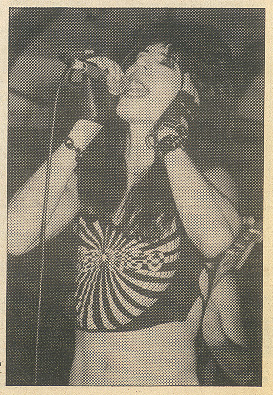
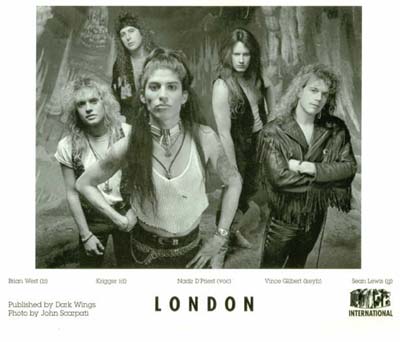
London’s Nadir D’Priest – The 1st full in bloom Interview – 2005

The 1st full in bloom Interview w/
LONDON / D’Priest Vocalist
Nadir D’Priest

full in bloom: What’s new? What have you been up to lately?

Nadir D’Priest: Well, at this time I am looking for a label and/or distributor so I can release my second LONDON album, Don’t Cry Wolf. This album never did have the right push or the right label behind it, so I hope that I can have it remastered, new art etc. and finally give it what it deserves.

full in bloom: You played in a band called Vertigo in the early eighties. Who were some of the influences for that band?

Nadir: WOW! thats waaaay back man, Vertigo had some very talented players and I think Brian Ikari was one of the fastest guitarist at the time, I am talking Faaasst. This when it was cool to be really fucking fast, I am telling you, this little guy could shred. Dean Avram was a clone of Van Halen’s bassist Michael (Anthony) – playing and look wise. Drummers, we had many.  This group was the beginning of my musical career. Influences, I think Led Zeppelin, Van Halen, Judas Priest, among many, many others.

full in bloom: Did you ever release anything with Vertigo?

Nadir: No! We never did. We cut some demos, but never an official release at all.

full in bloom: Any fond memories come to mind when thinking about your days in Vertigo?

Nadir: oh Yeah! At that time I was very young and had an array of chicks at our shows. BIG following, what can I say, they couldn’t help themselves. My outfits, make-up, voice and nasty attitude were very appealing to the females and some males..Yuck!. We used to throw parties at the Holiday Inn back when it was cool to stay there. We use get the Walter Lantz suite, you know? (Woody Wood Pecker creator) And JUST PARTY HARD. Good Times.

full in bloom: What year did you join London? Describe the process of how you ended up being the singer.

Nadir: I believe it was end of 1984.  The process got started when Jack Russell (Great White) talked to my bass player Dean Avram from Veritgo and told him to get me into Vertigo but soon after that, Lizzie Grey approached me and I ended up leaving Vertigo to join LONDON. It was so fast that my image went to a completely different level of appearance and lifestyle. I became bigger than life at a young age. It was very cool looking back now.

full in bloom: Any memories stand out from the Non-Stop Rock recording sessions?

Nadir: This was the beginning for me since we were about to have our first born/album. Myself, Brian West, Bobby Marks and Lizzie were feeling real good about the recording and designing of the cover and all that fun stuff. No money really. I think Mr. (Mike) Varney gave us a whopping $8,000.00 to get it all done, but it was accomplished. Mission complete. Those were the days, us against the world.

full in bloom: Several big-time players were in London, at one time or another, including Nikki Sixx, Blackie Lawless, Izzy Stradlin, Slash, amongst several others. Who were some of the other musicians that you worked with that went on to become very successful and what were they like to work with?

Nadir: This question has been following me forever, since we all know who was more successful, right! I think that the people that I got to work with, (which the list goes on and on) they were all great to work with and I tell you why. That period was very special, players were hungry and not yet poisoned by the success. The innocence was the beauty of it all. It was incredible for me, cause we all wanted the same thing which is the DEAL the BIIIIGGG deal and everything that came with it. We were growing and making history together.

full in bloom: 3 most fond memories from your days in London.

Nadir: Non-Stop Rock
Don’t Cry Wolf
Making our first music video which was titled, “Radio Stars”
I can go on forever, we did so much.

full in bloom: Any memories stand out of the Don’t Cry Wolf recording sessions.

Nadir: Yeah! Working with Kim Fowley was one. I had the best time working with him, he was a very special character, a very talented dude. Unfortunately, I saw him at the Cleopatra records box set cd party a month or so ago and he did not stop to say hi. I guess that some things never change. Don’t Cry Wolf was engineered by Mr. Gene Meros who also worked as an assistant engineer for Van Halen’s Fair Warning album. He gave us the best BIG ROCK sound, a real gentleman. We also had some real crazy outfits done by some girl who was also working with Alice Cooper, so you can imagine what that was like, money was no object. The album cover was done at my good friend’s studio, Althea Flynt and Larry Flynt, who basically hooked us up with the photographer.  I can’t remember his name but he usually shot Amber Lynn and thousands of porno stars and skits. We brought in Siberian wolves, not stuffed, but real actors. It was quite a scene.

full in bloom: What kind of crowds did you have at London shows. What were a few of your more memorable shows?

Nadir: Man, it was packed, not only by girls, but by other musicians who would just stand there and stare at you.  It was funny. Memorable shows were the ones that we would do without full stage set up and one especially with Stryper.  We were playing at the Troubadour, LONDON was headlining.  We used to have a drum riser about 7 feet high and they wanted us to take it down so they could set up their drums.  So, we refused.  We had a major blowout with them, basically our bodyguards were ready. Fun shit. The other was with Poison in San Diego at the Adams Avenue Theatre. Same thing, the drum riser, But this time they tried to get their own bouncers to kick my ass and this black dude tried to put handcuffs on me.  That’s when the promoter, OUR MANAGER, pulled out a 9mm and the shit hit the fan.  Again, fun shit. This kind of dirt got around all over the place, so we basically did not take shit from anyone

full in bloom: Who were some of the bands that you played shows with, at the time, that went on to become stars?

Nadir: Warrant, XYZ, Alcatrazz, Great White, Poison, Stryper, Guns N’ Roses, there are more, but I can’t remember right now, sorry.

full in bloom: Did you tour with London? ( the first version)  Did you go overseas?

Nadir: Yes! New Orleans. We played on a river for the mayor and three thousand of his friends. This after our drummer, Dane Rage, left us in New Mexico and had to head back to Phoenix to audition a guy, for a period of two hours, to learn the entire set. Then we broke down outside New Orleans, did the show, got laid, and went on to finish the rest of the tour. We never made it overseas, but we did sell lots of records there.

full in bloom: Former London bandmate Lizzie Grey had co-writing credits on the Motley Crue song “Public Enemy #1,” off Too Fast for Love. Has he ever received any payments for his contribution?

Nadir: Yes he did, and probably does.

full in bloom: Did you ever hang out with Nikki Sixx? What did you think of him?

Nadir: The first time I met him was at his house in the Hills, and what I thought of him was that he was very cool to me and had great dope. Stayed up all night looking at his rifles and guns, basically talking and gacking.

full in bloom: When you were a club act with London, were you able to survive on record sales and gigs alone, or did you have another job? How did you survive in L.A. back then?

Nadir: Good question, NO, WHAT JOB! We lived off our fame believe it or not. I look back and still don’t know how we did it, but we did have lots of investors and people who loved the band. Never got a royalty check. The gigs paid for the party materials, clothes and stage props etc. We loved to put on a great visual show and sound great.

full in bloom: Describe a typical DAY-IN-THE-LIFE-OF Nadir D’priest back in your days (’85 to ’88) in London. From the time you woke up, to the time you fell asleep. What was a typical day like for you?

Nadir: I never did know were I was going to sleep. I knew I would sleep with a girl somewhere in Hollywood but I did not have a clue. I would stay up all night drinking and doing blow, listening to music, talking to people.  Then I would end up with one or two, sometimes three, girls having a bit of outrageous sexual fantasies, girl with girl and girls with me. Morning comes, I am still in bed with these girls, more dope and more drinks, toys etc. Go ’til 4 pm, sleep ’til 10 pm and start all over again. Wow, I am still alive. It’s incredible.

full in bloom: How many copies of Don’t Cry Wolf were sold? What about Non-Stop Rock?

Nadir: THAT! I would like to know myself. We never got any accounting from Varney at Shrapnel. Cry Wolf not much, no distribution.

full in bloom: Were you paid for your appearance in the The Decline of Western Civilization Part II: The Metal Years? Did your life change any after that movie came out?

Nadir: Yes, we did get paid. I think about $2,000.00 for the whole thing. It changed a lot. Everyone wanted to talk to us; we were rock stars, man (laughs). I think it put us on the map for the rest of our lives and beyond; we are here for a loooooong time.

full in bloom: I read somewhere that some of the bands were angry with you after that movie. Who was upset with you & why?

Nadir: I know that many of the smaller bands did not want LONDON on the movie, but the director Penelope Spheeris did because of our antics and bad rap among other local bands. The ones that did not like us never did have the balls to confront me about it and still don’t. Fuck them, they know who they are.

full in bloom: What’s going on with Don’t Cry Wolf never being released on cd? I once saw a bootleg copy of it sell for over a hundred dollars on Ebay. Why has it never been released?

Nadir: Well, that album was never licensed to the right company, so it never did get the chance to be exposed correctly. I am the owner of it, so if anyone is interested, they can contact me. I would like it to be a CD/DVD deal, not just the music.

full in bloom: What about Non-Stop Rock? It was in print and has now disappeared? How long was it in print and why isn’t it any longer?

Nadir: Again, Shrapnel has the masters and is hanging on to it, but if this continues, then I would either buy the masters or get my attorney to handle it. I recently spoke to Varney and it sounded like he may be into it. But to be honest with you, I think that Varney regrets his involvement with LONDON. Why would you hang on to the music and not release it. Noise Records has done the same with D’Priest. Why isn’t the record available, beats me. They basically are not interested in re-releasing but it won’t end there, I guarantee it.

full in bloom: Why did London never sign with a major label during 1985 to 1988? Were there any close calls?

Nadir: Plenty of offers, but they never signed us. You got to remember, LONDON, prior to me being the singer, did not have any music published as far as vinyl or tapes, never. When I joined, things started to happen immediately. I don’t want to mention labels, because they never did anything for us or me so I won’t promote them at all, they don’t need it. LONDON had the curse almost like being blackballed from the industry but people still wanted to know all our moves. No one could erase us from the map, nobody!….and never will.

full in bloom: At the end of the 80s, London signed with a major label but changed the name of the band to D’Priest. By that point, what had happened to Lizzie Grey? Why was he not a part of that band?

Nadir: I still don’t know what happened with Lizzie, but he went on to do his deal, so I congratulate him for that. The change to D’Priest was done because of the long history of LONDON and names and bullshit that came with all these rock star musicians. So the president of Noise in NY, Bruce Kirkland, suggested the change, and we did it, and it worked.

full in bloom: Who were some of the bands that you toured with while you were in D’Priest.

Nadir: We played with so many but mostly we would be on the road on our own and hook up with nationals via the agency, Mark Hyman in Tune Management at the time.

full in bloom: Any memories stand out from the Playa Del Rock recording sessions.

Nadir: Oh yeah, we had the pleasure of working with one of the most amazing producers, Mr. Richie Podolor and his partner Bill Cooper. This man had 52 platinum albums, Black Oak Arkansas, Heart, Three Dog Night, Steppenwolf, Alcatrazz and the list is scary. We also had the opportunity to work with Elton John’s keyboardist, Guy Babylon, who played on most of the album and also Three Dog Night original Hammond player and keyboard master Mr. Jimmy Greenspoon. What can I say? Man, this kind of talent from the best era from the ’60s to the ’70s is hard to come by. I will probably never ever have the chance to do it again with the old school players. I was blessed.

full in bloom: In the nineties you were instrumental in putting a CD-ROM together for the Rolling Stones. What tour was it for and how did it come about?

Nadir: The Rolling Stones Voo Doo Lounge CD-ROM was the most amazing task I have ever encountered in my life. I had been hired by a company called Second Vision New Media from NY, which was owned by Bruce Kirkland, who was president of Noise Records in 1989. Later years he became Vice President of Capitol Records USA. He introduced me to some people who where looking to work on the Stones CD-ROM. Things happened so fast that I became project director for the CD-ROM working for the Stones exclusively, not for Virgin, but the band. So you can Imagine the scene. The biggest and most baddest band in the world. I was doing things that most people dream of, the royalty of rock n’ roll. Amazing time.

full in bloom: Later, you went solo under the name Antonio Nadir. What kind of music were you playing?

Nadir: This was my solo attempt to Rock en Español. I had the pleasure of working alongside Matt Sorum (The Cult, Guns N’ Roses, Velvet Revolver) who played on 99% of the album and co-produced it with me. This album was a real challenge for me going to my roots. We had a lot of fun doing it and playing in Mexico City. It was ahead of its time for Latin America.

full in bloom: You seem to be quite popular in Mexico. What was the largest crowd you have played for in Mexico?

Nadir: Depends. I signed autographs for 5 hours straight at a place called El Chopo, it’s like an ’80s flea market. Nothing in the world like it, still going on. Thousands of thousands.

full in bloom: You were interviewed for Behind the Music with Guns N’ Roses. I have not seen it yet, so I don’t know if your parts were included, but what were your experiences with Axl Rose? Any good stories and did they include your parts?

Nadir: They did not include my parts and maybe one day you can ask Axl himself, tired of the same question everywhere I go.

full in bloom: While looking on the internet, I found a record company that you own, or something? Are you a distributor in Spain, or what is the deal? It looked like you had some big names on it, but my Spanish is not so good and I couldn’t make out what it was? Please explain.

Nadir: Used to. Not anymore. Too much responsibility.

full in bloom: Recently you joined a band called Steel Prophet. Were they already signed when you joined or did the band sign to a label afterward?

Nadir: Oh yeah, we got signed afterwards.

full in bloom: How was it singing to metal music again?

Nadir: It was fucking amazing. Unfortunately, it was not working for either of us.

full in bloom: Any memories stand out from the recording sessions for the “Beware” release?

Nadir: Yeah, doing my vocals in a garage with no A/C and having to listen to someone complain the whole time about how fast we needed to deliver the record. Not good memories.

full in bloom: Why did you leave the band?

Nadir: Easy, the guitarist wanted to work with his buddy, so I moved on.

full in bloom: Nadir D’Priest is transported in time back to the year 1984. Is there anything you would do differently?

Nadir: Yes and no. I should of fucked this one girl and I do regret it since she loved to eat pussy all the time, missed out. No, because those are the cards that I was dealt, so you can’t go back and change anything. I had a great time. Life is too short so look ahead and look at the future. Move on.

-The Fast 5-

full in bloom: What is your most disgusting habit?

Nadir: Pick my nose

full in bloom: What is the most feminine thing you do?

Nadir: Lipstick, of course

full in bloom: If there is a God, what is the first question you would ask God when you arrive?

Nadir: Where did my money go?

full in bloom: Greatest Rock band of all time?

Nadir: The Rolling Stones

full in bloom: What were you doing 40 minutes before you sat down to do this interview?

Nadir: Working on a music video for a rap artist.

Categories
Interviews Music Top Stories Tour Dates

Sweet Savage’s Joey C. Jones – The full in bloom Interview – Shock Tu, The Gloryhounds, C.C. Deville


Interview with Sweet Savage / Shock Tu / Joey C Jones & The Gloryhounds vocalist
Joey C. Jones

full in bloom: What’s new, what have you been up to lately and what’s in the future?

Joey C. Jones: I’ve got a lot going on, I’m working on a new cd with Johnny “Razz” Callihan. Also, Renegade Radio Productions, is releasing The Best Of Joey C. Jones. This cd will contain songs from Sweet Savage, Shock Tu, The Gloryhounds, Orange Helicopter, and 4 or 5 songs from my best cd Crabtree. It also has songs I recorded with Cheap Trick and C.C. Deville.

full in bloom: What are your 3 most fond memories of being in Sweet Savage?

Joey: Going from high school in Ohio to being voted best new band in LA within 2 years. I guess it is also nice to be credited as the first band in LA to do the glam thing and having the #1 import record for 16 weeks in the Kerrang charts.

full in bloom: What year was the Sweet Savage Lp released?

Joey: 1986

full in bloom: How did you originally come in contact with Dana Strum?

Joey: He wanted me to audition for the Vinnie Vincent Invasion

Vinnie Vincent Invastion / Slaughter / Vince Neil Bassist Dana Strum

full in bloom: What were some of the promises that Dana Strum made? What were some of the promises Dana did not deliver?

Joey: It sounds like you wanted me to call him a prick bastard or something! He was our producer but he was also acting as our manager and since we were the hottest band on the strip we got some offers from major labels but he was asking for too much and turned them down. We were too young to realize what we were doing.

full in bloom: What label released the Sweet Savage album, or did you put it out yourself?

Joey: It was released through a production company. After it sold 25,000, it got picked up by Important Records.

full in bloom: Did you ever receive any residuals from that record?

Joey: Yes.

full in bloom: How many copies of that album were sold?

Joey: 90,000.

full in bloom: While the band was still in Texas, did you tour? What was your show schedule like? Did you play anywhere outside of Texas?

Joey: If you read the information on the archives cd, it states that we played over 1, 200 shows, and its true. We played the U.S., Canada and had shows booked in Europe when we broke up.

Laine Sheridan, Joey C. Jones, Chris Sheridan, Walt Woodward III

full in bloom: Did you ever play any shows with the early version of Pantera?

Joey: We played 3 or 4 shows with them.

full in bloom: What is your memory of them at that time, were you friends?

Joey: I always got along with Darrell he was a great guy.

full in bloom: What year did the band relocate to Los Angeles?

Joey:  ‘85

full in bloom: What was your experience in L.A.?

Joey: I don’t have any of the same old boring stories about sleeping on floors and starving etc. we had big time investors and when we were in L.A. we lived very well. We were considered an L.A. band but we did not do what the other bands did. You could only play 1 show a month and you were suppose to promote the show by handing out flyers, well after we would sell out the Whiskey, Roxy, Country Club etc. we had options the other bands did not have, we owned our own P.A, Lights, Trucks, and Motor home. We had a good agent so we could leave town and play shows in San Diego, San Francisco, Sacramento, Fresno, and Phoenix, and come back to L.A. and take out full page ads instead of passing out flyers, and we had good live shows because we were always playing.

full in bloom: Why didn’t Sweet Savage get signed? Your timing was perfect; was there a defining moment that everyone thought, let’s break up the band?

Joey: See question #5, I left because I was finally learning how to write good songs and I didn’t want to be known simply for my hair style, so blame it on me.

full in bloom: What did you do when Sweet Savage broke up?

Joey: I had Shock Tu ready to go, I had the same agent so I hit the road right away. I played the cities where Sweet Savage had success, Columbus, Cleveland, Cincinnati, Philadelphia, Pittsburgh, Memphis, Dallas, Houston, Austin, and New Orleans; we were the highest paid club act.

full in bloom: What were some of the bands that were playing the L.A. music scene, while you were in Sweet Savage, that went on to greater success? Did you play shows with any of them?

Joey: Poison, Warrant, Guns ‘N’ Roses, I played a few shows with Warrant, Chili Peppers and L.A. Guns.

full in bloom: Are you still friends with any of them?

Joey: I am still friends with Jani Lane and Bobby Dall.

full in bloom: I have seen you live several times and always thought if AC/DC wanted to get back to their roots, they should hire you. You sing Bon Scott better than I have ever heard anyone do it. Did Sweet Savage play any covers?

Joey: My first band was a cover band, we did a lot of AC/DC and I sang Bon well, I didn’t dig the Brian Johnson stuff. We did covers for our encores like AC/DC, and Led Zeppelin.

full in bloom: Who released the Sweet Savage anthology? Do you receive any compensation for the sales of it?

Joey: Chris Sheridan released it, I wish he wouldn’t have because I was young and I wrote bad songs. I received a few checks but not a lot, Chris needs the money more than I do.

full in bloom: What are your 3 most fond memories of being in Shock Tu?

Joey: We played good gigs and we made a lot of money. My best memory was recording a record that was produced by Rick Neilsen and Robin Zander. Cheap Trick is one of my favorite bands and I learned a lot from them, it was a good record that wasn’t released because of record company bullshit, I cant say a lot because I could get sued again for slander, but some of those songs will be released on The Best of Joey C. Jones cd that will be out soon on Renegade Radio Productions.

SHOCK TU

full in bloom: Do you ever talk to any of the guys from that band?

Joey: Yes, I talk to Ken and Rick.

full in bloom: Later you formed a band with C.C. Deville.  How did that come about?

Joey: C.C. called me right after the 1991 MTV Awards, he said he would leave Poison if I would start a band with him, he offered me a lot of money and said he would still be on Capitol Records, 2 days later he sent me a large check and a plane ticket.

full in bloom: What was it like working with him? Did you ever record any songs, or did anything get done at all?

Joey: We went through a lot of players and a lot of big names. He lived in the Hollywood Hills and a lot of Hollywood types were hanging out because the party was always at CC’s house. It was fun for a while; I got to hang out with some people I have always liked like Sam Kinison and Eddie Van Halen. We wrote some good songs, my best of cd will have at least one of them. He advanced me a lot of money but I was never the Hollywood type and we were getting too messed up. I was in a hurry and he wasn’t, so I left. I have nothing bad to say about him, I was paid very well.

full in bloom: Why did you leave CC and take the rest of the band with you? What was that time like for you?

Joey: I left C.C. because I knew I had enough good songs to get a deal on my own, I kept his band because we had received a lot of press from magazines, MTV, the USA network, etc. I wanted to keep the momentum going.

full in bloom: How soon after leaving did you score a record deal for the Joey C Jones & the Gloryhounds project?

Joey: I got a deal with one phone call.

full in bloom: Did you tour for that album? What were some of the bands you toured with?

Joey: My first single was a song I did with Cheap Trick called “Wait All Night” it was added to Radio Nationwide. We toured for 18 months and opened up for The Black Crowes, Collective Soul, Faith No More, and many others I won’t mention.

full in bloom: What are your 3 most fond memories of being in the Gloryhounds?

Joey: My best memories were being added to playlists in major markets. My music video received airplay on MTV, USA, Canada, and Europe. My best memory was playing in front of 27,000 people in Salt Lake City it was a Radio Station event by KBER. I got a lot of airplay there so, I was on the bill with some 80’s bands like The Scorpions, Vince Neil, Great White and some others not worth mentioning. I don’t like being associated with that ERA but I can honestly say we stole the show.

full in bloom: In retrospect, is there anything you would have done differently?

Joey: I had one good manager Riki Rachtman, the others I shouldn’t have believed in, I should have learned more about the business.

THE FAST 5

full in bloom: What is your most disgusting habit?

Joey: Constantly ripping on the music business. Now that I know about it I hate seeing new artists getting screwed, that’s why I am starting my own production company. I will help the young bands do the right thing.

full in bloom: What is the most feminine thing you do?

Joey: I still pull girl’s hair.

full in bloom: If there is a God, what is the first question you would ask God when you arrive?

Joey: Can I sing something for you?

full in bloom: Greatest Rock band of all time?

Joey: The Beatles, It’s so obvious.

full in bloom: What were you doing 40 minutes before you sat down to do this interview?

Joey: Stylin and Profilin.

Categories
Interviews Music Top Stories

Anthrax Frontman Joey Belladonna – The full in bloom Interview – 2005

Interview with Anthrax vocalist
Joey Belladonna

full in bloom: What’s new, what have you been up to lately and what’s in the future?

Joey Belladonna: I’ve been touring with the Anthrax 20th Reunion Tour. During the last week, I’ve been resting from the tour and preparing for the next. Also, we just finished working on our live DVD.

full in bloom: How has the tour been going?

Joey: Just fine. There were great crowds with great responses and everyone is getting along well.

full in bloom: The band features all the original members, correct? If so, how has it been playing with those guys again?

Joey: Well, the very first Anthrax vocalist was Neil Turbin, for about a year and a half and Dan Lilker was the bass player during that time. I think there was another drummer, too. So, we’re actually more or less the second group. It’s nice to be in a tight organization with great musicians. It’s really good to be playing with those guys again.

full in bloom: How did the tour come about?

Joey: Charlie (Benante) and Scott (Ian) discussed it with management. Management then gave me a call and arranged for everyone to get on the phone in a conference call to work out the details. It took off from there.

full in bloom: Why are there only 3 Anthrax shows booked in the States? Why would you tour Europe first?

Joey: Actually, we began the tour with three dates in the States as warm-up shows before we went to Australia. We then followed with the European tour. We are now working on shows for this fall in the States and have five shows in September with Megadeth’s Gigantour.

full in bloom: Where did you tour in Europe?

Joey: Forgive me if I leave anyone out here, but we played Spain, France, Belgium, Slovenia, Austria, Hungary, Germany, Italy, Greece, England and Finland.

full in bloom: Any chance of a new Anthrax record? If so, when can we expect to hear it?

Joey: There’s nothing definitive right now, but the longer we move along, the bigger the possibility.

full in bloom: What are your 3 most fond memories of being in Anthrax?

Joey: First of all, joining Anthrax was awesome. Then, playing with a such a great band and getting to see the world would be the other two.

full in bloom: Describe the year 1985, as best as you can recollect. That year you released Armed & Dangerous and Spreading the Disease. What were some of the highlights from that year?

Joey: Just walking in the room and not knowing who Anthrax was or ever hearing their music was a moment I’ll never forget. Two days later, I’m doing the Spreading the Disease album with them as well as Armed & Dangerous. Just the beginning of a great band was awesome in itself. Those are very fond memories.

full in bloom: I once worked with a guy named Kerry Crafton, who produced & engineered a lot of Metal Blade acts, including engineering the first Rigor Mortis record. What was your connection with Kerry?

Joey: Kerry was doing lots of demos and did a couple for me back in 1994/5. He was assigned to the project at the time and that is how I knew him. The first set of demos after Anthrax was done at the Goodnight Dallas Studio, but never released.

full in bloom: Any memories stand out from the Spreading the Disease sessions?

Joey: Yeah. It was my first studio record and came together really nicely. It was a wonderful experience. We also signed with Island Records after recording that album.

full in bloom: What is your favorite Anthrax release? Why?

Joey: I’d have to say Spreading the Disease because it was so overwhelming. Everyone was so open-minded and let everyone do what they had to do to finish it. The song “A.I.R.” was put together at the end of the session while we were in the studio and added to the album.

full in bloom: Who were some of your favorite bands that you toured with throughout your career?

Joey: Well, there were several, but Iron Maiden, Ozzy, and Black Sabbath were some of my favorites.

full in bloom: Any memories stand out from the Among the Living recording sessions?

Joey: We did the mixing it in the Bahamas and that was a lot of fun. We were there for a couple weeks and really enjoyed it. Also, working with Eddie Kramer was great. There are a great bunch of songs on that record.

full in bloom: What was your highest selling record? Approximately, how many copies?

Joey: The I’m the Man EP was our highest seller. It was certified at a million copies sold back then, but I have no idea where it stands at this time.

full in bloom: Who are some of the people that have inspired you most? Why?

Joey: The Beatles, with their great songs. Ian Gillian because of his great range. Steve Walsh……..super musician. Those are a few of several.

full in bloom: Have you had any Spinal Tap moments in your career, if so, what was the latest, or one of your top 5 spinal tap moments?

Joey: We were going to Slovenia during our latest tour and they had held the flight half an hour for us. While boarding the aircraft, one of our guys said, “Hey, they’re not loading all our gear on the plane! They’re driving away with it!” We had to make a call and have them return and load our equipment on the plane. They then actually loaded some of the gear into seats in the passenger cabin. Some of our crew guys didn’t make it on the flight due to customs.

full in bloom: How has your view of the music industry changed since the eighties?

Joey: You know what? My view hasn’t changed, but the industry has. I just try to go with the flow.

full in bloom: Any advice you could give to people just starting out in the industry?

Joey: You have to really love playing and be ready to work very hard, if it’s something you seriously want to do. It takes a world of practice, focus and effort.

full in bloom: How do feel about being a pioneer of rap / rock?

Joey: It’s just something that happened. I never thought of myself as a pioneer, but I hope it made people more interested in what we did.

full in bloom: What was it like working with Public Enemy?

Joey: It was a lot of evenings full of fun. Flav made me laugh every night. It was so much fun, and having them close the show with us every night made it really awesome.

full in bloom: What was the state of the band like while recording and touring for the State of Euphoria release?

Joey: It was great! We were doing the Ozzy tour and really rolling along. “Antisocial” was doing really well then.

full in bloom: In retrospect, is there anything you would have done differently?

Joey: H-mmmmmmmm. I can’t really think of anything.

Categories
Interviews Music Podcast Excerpts Top Stories

Terry Glaze Pantera Lord Tracy Interview – Talks Pantera Albums 1983,1984,1985 – Dimebag, Vinnie

Terrence Lee

Terry Glaze
Pantera/Lord Tracy

Originally published on August 1, 2005

full in bloom: What is new, what have you been up to lately and what is in the future?

Terry: I live in Maryland. Wife and two kids. I get to play music almost everyday. I’ve been very lucky. I still do lots of recording. I have a small studio here in my house. I put out cds with different musician friends. I have a band here in MD called The Crayfish, and Lord Tracy has been doing some reunion shows across the country. Hopefully we can keep it going.

Terrence Lee
(L-R) Terry Glaze & Dimebag Darrell

FIB:  When you were just a teenager you played in a band called Pantera. What are your 3 most fond memories of being in that band?

Terry:  Playing with Darrell, Vince and Rex was a blast! Lots of great memories. Three of my favorite gigs were playing the Arlington Skating Rink, Six Flags and Tyler, Texas.

FIB:  How did Pantera form, what year and how old were you?

Terry:  1981? 11th grade. I was 15, I think. Originally it was me, Tommy Bradford on bass & Donnie Hart on vocals, Vinnie on drums and Darrell on guitar. Darrell had a Les Paul copy and a Sunn Beta amp that really rocked. Eventually I took over the singing and Rex Brown replaced Tommy on bass. This all happened by 1982.

FIB: In Texas, and especially in the DFW area, Pantera was very popular. How long did it take for that to happen?

Terry: We busted our ass practicing and playing out non-stop. Texas is so big, we would play Houston, Dallas, Fort Worth, someplace else, and then start over again every month.

FIB: How many copies of Metal Magic were sold?

Terry: Who knows? As many as we could sell off the band stand. We did everything ourselves. It was great seeing record reviews of our albums in European rock magazines right alongside Iron Maiden & Metallica.

FIB: What was the most amount of money you received for playing a show with Pantera?

Terry: That’s funny.

FIB: How much were you making at the time you left the band, between album sales and shows? What was your cut for each record sold?

Terry: A full share, which has yet to be received. Again, funny stuff.

FIB: Why were you never signed to a major label during your time in Pantera?

Terry: No one was willing to take a chance back then.

FIB: I read a rumor online that Pantera came close to getting a deal?

Terry: That is news to me.

FIB: What is going on with the early Pantera cd releases on Ebay? Did someone sign a deal with a record company to release those, or are they bootlegs? 

Terry: Those are bootlegs. I bought a copy for myself off of Ebay a while back. i believe they are from Europe. Good stuff.

FIB: Where did you tour with Pantera?

Terry: We played all over Texas, Oklahoma and Louisiana. We played almost every weekend of every month from around 1981-1986, I think.

FIB: Out of the 3 releases you did with Pantera, which one is your favorite and why?

Terry: I like them all, but probably Projects in the Jungle, I just dig the tunes…especially “All Over Tonight.”

FIB: Why did you leave Pantera?

Terry: It wasn’t about the two hours a day we played together on stage. I loved playing with those guys. We were a great band.

FIB: Who was the Eldn’ & how much of a role did he play in the production of the records?

Terry: The Eldn’ (LD) is Jerry Abbott, Vince & Darrell’s father. He worked at a small recording studio in Pantego, Tx. We would go in and record our original tunes whenever the studio was not being used. We were able to get tons of experience in a recording studio before we even got out of high school. Jerry did a little bit of everything for the band. He booked us, financially backed us, was our recording engineer, he even wrote some of the song lyrics. He was a big reason for Pantera’s early success. I think he ended up moving to Nashville where he has a studio today.

FIB: Any memories stand out from some of the Pantera recording sessions?

Terry: We recorded our first three records there at Pantego, as well as all the demos. It was a great experience that helped me out so much in my later career. I wasn’t intimidated by the “red” lite when I got into other studios.

FIB: Who did all the artwork for those Pantera records? Who did the logo?

Terry: A friend of the band did the paintings for the album covers. We were into Iron Maiden. Not sure on the logo.

FIB: How did the songwriting process work in the band?

Terry: Usually Darrell & Vince wrote the music & then I wrote the lyrics. Sometimes I wrote the entire tune, or maybe Jerry would write lyrics to one of Vince & Darrell’s songs. We all helped each other out. We split everything equal.

FIB: Who ran Metal Magic Records?

Terry: That would be Jerry & Pantera. We were our own little record company.

Terrence Lee

FIB: What are your 3 most fond memories of being in Lord Tracy?

Terry: Seeing our video on MTV one night in Memphis while we were on stage doing a show. Touring with Ace Frehley and playing in Little Rock this past Memorial Day weekend opening for Reo Speedwagon.

FIB: Your debut Lord Tracy release, Deaf Gods of Babylon, achieved quite a bit of success. You had a hit on the radio and rotation on MTV with “Out with the Boys.” Why didn’t the band achieve more success?

Terry: Got lost in the shuffle. Typical Spinal Tap stuff. We had the “real” Marty Fluffkins working our record.

FIB: The band was originally called Tracy Lords. Did she force you to change it? Have you ever met her?

Terry: She wanted us to pay her, we changed the name so we wouldn’t have to. Never met her, but would have liked to.

Terrence Lee

FIB: Lord Tracy bassist Barney (Kinley Wolfe) has played with Black Oak Arkansas, The Cult and I even saw him with Jack Ingram. How did you meet him?

Terry: I met Barney when he was playing in lightning way back when. They actually opened for Pantera when we did a show at the Bronco Bowl. He’s the best I’ve ever seen. Any band would be lucky to have him as a member. I believe we all like playing intense passionate music. We’re trying to get a response from the audience.

FIB: Who were some of the bands Lord Tracy toured with?

Terry: Ace Frehley was the biggest, we did a show with Bad English in L.A. way back. Reo Speedwagon, this past spring.

FIB: How did the reunion with Lord Tracy come about and how has it been to play with those guys again?

Terry: We all had been talking to one another and it just kinda happened. It’s been better than I could have imagined. I think we appreciate it more this time around.

FIB: Whatever happened to Blowfish?

Terry: A great band, I loved playing with those guys, too. We did some recording and played out a little bit. We just never got signed.

FIB: Didn’t Blowfish feature one of the Goo Goo Dolls?

Terry: Mike Malinin, the best drummer I ever played with. Rob Cooper on bass, a killer player and a good friend. Dave Hineman on lead guitar, one of my best friends, awesome player….and me yelling and bashing guitar.

FIB: In retrospect, is there anything you would have done differently?

Terry: I think I would only have tried to be more patient and not take things for granted. I got to play with some world class musicians, and I feel very lucky for that. We had great experiences traveling around and I learned so much that helped me along the way. I can’t complain though. Life has been very good to me.

Terrence Lee